

Why Is My Garage Door So Loud? What Grinding, Squeaking, Popping and Rattling Mean
A garage door can produce many different noises, but the sound itself is only part of the diagnosis. Grinding may point toward rollers, bearings, tracks or opener-drive components. Squeaking can come from hinges, rollers or springs. Popping may involve spring coils, hinges, door sections or track movement. Rattling often suggests vibration, loose non-tension hardware, opener mounting, chain movement or parts moving where they should remain stable.
The most useful clues are what the noise sounds like, where it comes from, when it occurs and whether garage-door movement has changed at the same time.
This guide from Pasadena Garage Door Repair Experts explains how Pasadena homeowners can separate normal operating sounds from noises that may indicate worn rollers, hinges, springs, opener components, track resistance, cable problems or other garage-door conditions.
Why Is My Garage Door So Loud?
A loud garage door can be caused by worn or dry rollers, hinges that need attention, track resistance, loose non-tension hardware, spring movement, opener-chain vibration, worn opener drive components, panel movement, cable or drum problems, or a garage door that is no longer balanced and moving smoothly.
Grinding commonly points toward friction, worn rollers, bearings, track contact or opener-drive components. Squeaking often involves dry moving joints such as hinges, rollers or spring-related components. Popping may come from spring coils, hinges, sections or hardware shifting under load. Rattling often comes from vibration, loose fasteners, opener mounting, chain movement or door sections and hardware moving during travel.
Not every noise means the garage door is about to fail. Some spring squeaking, for example, can occur during normal use. The concern increases when a new noise appears together with a change in balance, crooked travel, jerking, opener strain, a loose cable, a roller leaving the track or a visibly damaged spring.
Homeowners can safely listen, observe the door from a clear position, inspect visible rollers, hinges and tracks, and look for obvious loose or damaged parts. High-tension spring, cable, cable-drum and bottom-bracket components should not be adjusted as part of a DIY noise diagnosis.
Diagnose the Garage Door Noise Before Replacing Parts
A useful noisy-garage-door diagnosis begins with four questions:
Those questions prevent a common troubleshooting mistake: treating every noise as a lubrication problem.
A dry hinge may squeak and respond to appropriate lubrication. A damaged roller bearing may grind because the part is mechanically worn. A bent track may scrape because the roller is rubbing where it should not. A stripped opener component may grind inside the powerhead. A loose chain may slap or rattle against the opener rail.
Spraying lubricant onto every visible metal surface would not fix all of those causes.
The sound's timing is especially helpful. A noise that occurs throughout the entire travel cycle suggests a different problem from a single pop that happens every time one specific hinge reaches the curved section of track.
Likewise, grinding directly above the center of the garage may point more toward the opener or torsion system, while scraping at one side near a roller may point toward the door and track.
The goal is not to identify a component from sound alone. The goal is to combine the sound with visible movement and component location.
What Does a Grinding Garage Door Noise Mean?
Grinding usually suggests friction, worn bearings, a damaged roller, metal-to-metal contact, opener-drive wear or a component that is binding instead of moving smoothly.
Grinding deserves more attention than a light occasional squeak because it often suggests that surfaces are moving against one another under load.
Worn or seized garage door rollers
Rollers guide the garage door through the vertical and horizontal tracks. Depending on the roller design, the wheel may turn around a bearing system as the door moves.
If a roller becomes worn, cracked, seized or damaged, it may stop rolling smoothly and begin sliding or dragging through the track.
That can create:
- Grinding.
- Scraping.
- Rumbling.
- Vibration.
- Jerky movement.
Watch the individual rollers from a safe distance while the door moves. A roller that stops rotating, visibly wobbles or repeatedly contacts the side of the track deserves closer inspection.
Roller bearing wear
Some rollers contain bearings that can wear over time. A bearing may become rough before the wheel itself looks obviously damaged.
The result can be a deeper grinding or growling sound rather than a high-pitched squeak.
Lubrication can reduce friction on appropriate serviceable bearings, but it does not restore a bearing whose internal surfaces are physically worn or damaged.
Track contact
A garage-door roller is supposed to travel within the track without the door sections grinding against the track itself.
If a track has shifted, bent or become misaligned, the roller stem, section, hinge or another component can rub against metal.
A valuable clue is location. If grinding consistently comes from one height or one side of the door, look at that specific portion of the track rather than assuming the whole system is dry.
Opener drive grinding
Grinding can also come from the garage door opener rather than the door.
Depending on opener design, possible sources include gears, a screw-drive carriage, sprockets, chain components, trolley movement or other internal drive parts.
Genie notes in its manufacturer maintenance guidance that grinding or screeching from certain screw-drive systems can involve the screw and carriage assembly and may require model-specific cleaning, lubrication or component inspection.
The distinction matters because spraying the garage-door rollers will not repair a worn opener gear.
What Does a Squeaking Garage Door Mean?
Squeaking commonly comes from friction at moving joints such as hinges, roller bearings, spring-related bearing points or other hardware that moves each time the garage door opens and closes.
Squeaking is often less urgent than grinding, but it should still be understood rather than ignored indefinitely.
Dry garage door hinges
Hinges connect individual garage-door sections and allow them to articulate as the door transitions from the vertical tracks into the curved and horizontal portions of the system.
Every cycle causes movement at the hinge pivot.
A dry hinge can produce a repetitive squeak as the joint pivots.
If the same squeak occurs at a predictable portion of travel, watch which hinge is articulating at that moment.
Roller bearing squeak
Serviceable roller bearings can also become noisy when lubrication is inadequate.
The sound may change with door speed because the bearing is rotating faster or slower as the door moves.
Some roller designs require different maintenance from others, so homeowners should not assume every nylon or sealed roller should be sprayed with the same product.
Spring squeaking
Springs can sometimes squeak during normal operation.
The Door & Access Systems Manufacturers Association notes in its garage door system safety guidance that squeaky springs can occur during normal use and do not automatically indicate a spring failure.
That does not mean every sound from the spring area should be ignored.
A spring-related squeak becomes more important when accompanied by:
- A visible gap in a torsion spring.
- Significant corrosion.
- A garage door that suddenly feels heavy.
- Door balance changing.
- Uneven movement.
- A loose cable.
Sound and mechanical condition should be evaluated together.
Why Does My Garage Door Make a Popping Noise?
A popping garage door can involve spring-coil movement, hinges, door-section flexing, rollers shifting in the track or hardware moving suddenly under load.
Popping is particularly useful to diagnose by timing.
Does the sound happen once when the door begins moving? Does it happen every time one section reaches the curved track? Does it come from the spring above the door? Does it occur when the door changes direction?
Spring-coil movement
A torsion spring changes as the garage door moves. Coil surfaces can sometimes produce a pop, click or squeak as they load and unload.
A normal spring sound should not be confused with the loud bang that can occur when a torsion spring actually separates.
If the homeowner heard one unusually loud bang and afterward the garage door became extremely heavy or opened only a few inches, inspect the torsion spring visually from the floor for a separation or gap.

Hinges popping under movement
A damaged, worn or binding hinge can pop as a garage-door section changes angle.
This may occur at almost the same door position every cycle because the hinge reaches its greatest movement as the section enters or leaves the curved track.
Door-section flex
A garage-door section that is damaged, poorly reinforced or under unusual stress can flex enough to create popping noises.
Look for visible bowing, creasing or distortion without standing beneath the moving door.
Roller movement
A roller can pop as it changes direction through the curved track, particularly if the roller or track is worn or misaligned.
Repetitive popping from the same side and same height deserves visual attention to that roller and hinge location.
Why Is My Garage Door Rattling?
Rattling commonly comes from vibration: loose non-tension hardware, opener mounting, chain movement, track brackets, door sections or other components moving slightly while the garage door operates.
A garage door contains many fasteners and joints. Each opening and closing cycle creates motion and vibration through the system.
Over time, some non-tension mounting hardware can become loose.
Track and support hardware
Track brackets attach the garage-door track to the surrounding structure. If a bracket is visibly loose, the track may vibrate when rollers pass through it.
That vibration can sound like rattling rather than grinding.
Opener mounting
A ceiling-mounted garage door opener transfers some vibration into its mounting system.
If a mounting connection becomes loose, normal motor vibration can produce more audible rattling through the garage ceiling.
Chain-drive movement
Chain-drive garage door openers naturally produce a different sound profile from many belt-drive units.
Excessive chain slack can create slapping or rattling along the rail.
Chain tension should be checked according to the owner's manual for the specific opener rather than tightened according to a universal rule.
Door sections and reinforcement
Thin metal sections, reinforcement struts, decorative hardware and section joints can transmit vibration.
A rattle that seems to come from the middle of the door can sometimes be a section or reinforcement vibration rather than a roller or opener problem.
Noisy Garage Door Rollers: One of the Most Common Sources of Door Noise
Rollers move every time the garage door moves, which makes them one of the first components worth observing when a door becomes louder.
Roller-related noise can include:
- Grinding.
- Rumbling.
- Clicking.
- Scraping.
- Squeaking.
- Rattling.
Steel rollers
Steel rollers can transmit more mechanical sound than some nylon roller designs, particularly when bearings or track conditions are worn.
That does not make every steel roller defective.
The concern is whether the sound has changed, whether the roller rotates smoothly and whether excessive movement or wear is visible.
Nylon rollers
Nylon rollers can provide quieter contact with the track, but they can still wear, crack or develop bearing problems depending on their construction.
A nylon wheel that is visibly cracked should not be treated as a lubrication-only problem.
Excessive side play
A roller that moves excessively from side to side can create rattling and irregular track contact.
Roller stems must allow necessary movement as the door travels, so some play is normal. The issue is excessive wear or abnormal movement.
Roller replacement versus lubrication
Lubrication can help a serviceable bearing or pivot point operate more quietly.
It cannot rebuild a worn bearing, straighten a bent roller stem or repair a cracked wheel.
If the noise returns immediately after appropriate maintenance, physical wear becomes more relevant.
Garage Door Hinges Can Squeak, Pop and Rattle
Hinges perform more movement than many homeowners realize.
A sectional garage door must change from vertical to horizontal as it opens. The sections can make that transition because hinges allow them to pivot relative to one another.
A hinge can produce several different sounds.
Squeaking
Dry pivot points can squeak during movement.
Popping
A worn or distorted hinge can shift suddenly as the door changes angle.
Rattling
Loose non-tension fasteners or wear at a hinge connection can create vibration.
Grinding
Severe hinge damage or misalignment can cause metal surfaces to bind.
Look for:
- Visible cracks.
- Bent hinge leaves.
- Elongated mounting holes.
- Missing fasteners.
- Excessive movement.
- A hinge that does not pivot smoothly.
Be careful when examining lower hardware. Bottom brackets can be connected to the high-tension cable system and should not be loosened as part of DIY hinge maintenance.
Garage Door Track Noise: Scraping, Grinding and Repetitive Clicking
Garage-door tracks guide the rollers. They are not designed to be a surface that the entire door continuously grinds against.
Track-related noise commonly appears when alignment changes or a roller no longer travels normally.
Bent track
Impact from a vehicle, storage item or equipment can deform a track.
Even a localized bend can produce a sound at the same door position on every cycle.
Loose track bracket
If a bracket no longer holds the track securely, the track may vibrate or move as the rollers pass.
That can produce rattling, knocking or changing roller noise.
Roller rubbing
A roller that runs hard against one side of the track can create a repetitive scraping sound.
The cause may be the roller, track position, hinge, door alignment or a combination.
Do not grease the tracks
A common DIY response to track noise is to coat the garage-door tracks with grease.
That is generally not the correct approach.
LiftMaster maintenance guidance for supported residential openers calls for oiling door rollers, bearings and hinges while specifically stating not to grease the garage-door tracks.
The rollers should travel through clean, properly aligned tracks rather than rely on a heavy grease layer to slide through mechanical resistance.
Garage Door Spring Noise: When Squeaking or Popping Deserves Attention
Springs are part of the counterbalance system that helps offset garage-door weight.
Because they repeatedly load and unload, they can produce mechanical sound during operation.
DASMA notes that squeaking springs do not necessarily indicate a problem and recommends suitable garage-door lubricant where appropriate. Persistent noise can justify professional inspection.
The important distinction is between noise alone and noise plus a change in garage-door behavior.
Noise alone
A light squeak from an otherwise balanced, smooth-moving door may be a maintenance issue.
Noise plus heavy door
If spring-area noise appears while the garage door also becomes unusually heavy, the counterbalance system deserves closer inspection.
Noise plus a visible spring gap
A visible separation in a torsion spring generally means the spring has already broken.
Loud bang followed by opener strain
A loud bang combined with a door that opens only a few inches can be consistent with torsion spring failure.
Noise plus a loose cable
The cable and spring system work together. A loose or displaced cable is not a condition to troubleshoot by adjusting spring tension yourself.
- Loosening winding cones.
- Changing spring tension.
- Removing spring anchors.
- Adjusting cable drums.
- Disconnecting lift cables.
- Loosening bottom brackets connected to lift cables.
The Garage Door Opener May Be the Source of the Noise
Homeowners frequently describe the entire system as “the garage door,” but the opener and the door are separate mechanical systems.
The door contains sections, rollers, tracks, hinges, springs and cables. The opener contains a motor and drive mechanism that moves the door once the counterbalance system has made the door manageable.
Opener noise can include:
- Grinding.
- Humming.
- Chain rattling.
- Slapping.
- Clicking.
- Gear noise.
- Screw-drive chatter.
- Mounting vibration.
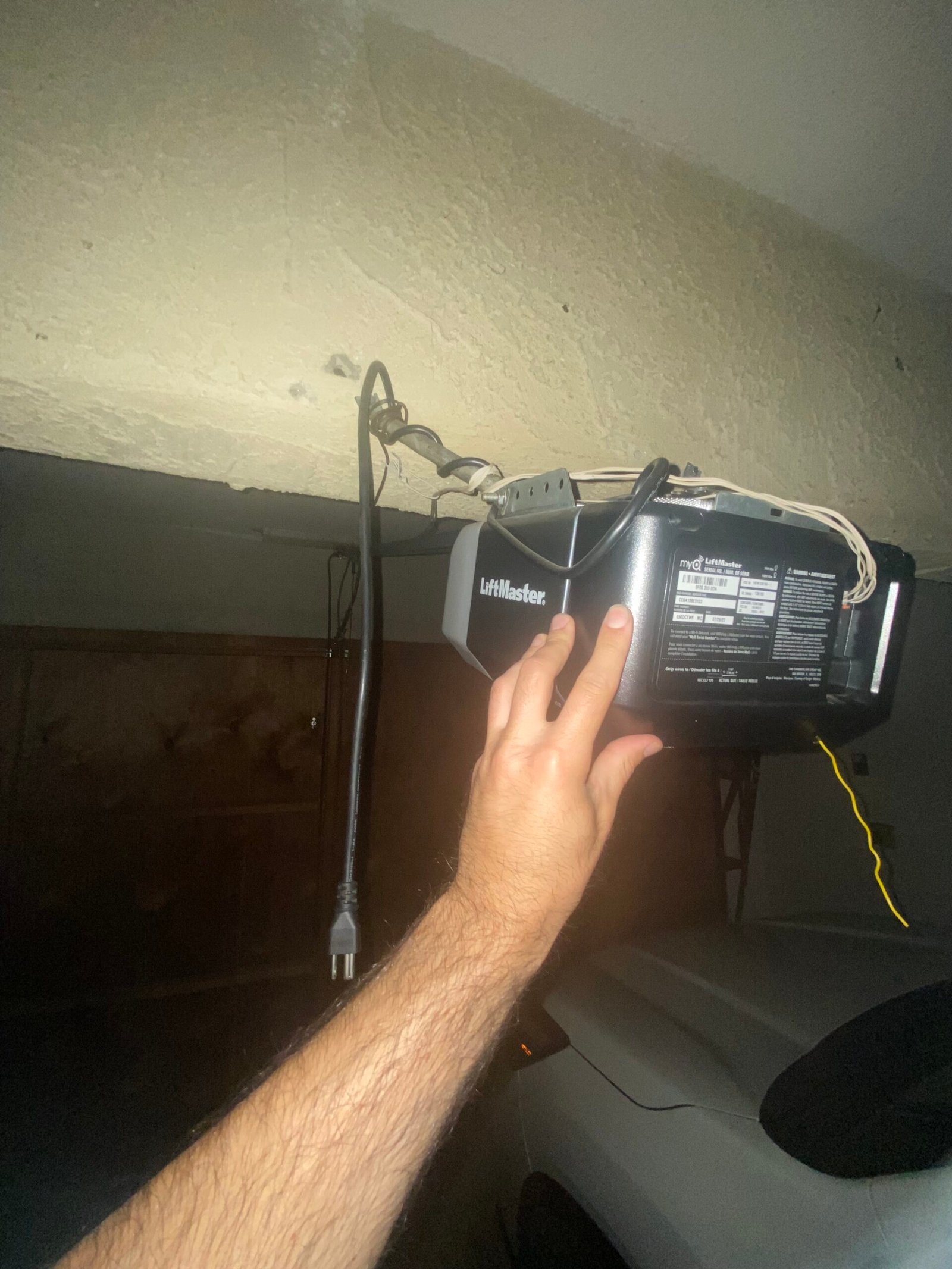
Grinding from inside the opener powerhead
Internal gears or drive components can wear.
A useful clue is whether the opener motor sounds active while the trolley or garage door moves poorly.
Humming with little movement
Humming can indicate that the opener is receiving a command but cannot produce normal movement.
That can involve the opener itself or a garage door that is mechanically too heavy or jammed.
Vibration transmitted into the ceiling
The opener motor and rail can transfer vibration into ceiling supports, particularly in an attached garage.
Loose mounting hardware can make that vibration much more noticeable inside adjacent living spaces.
Do not diagnose opener noise without checking the door
A noisy opener may be reacting to abnormal door resistance.
A broken spring, worn rollers, binding tracks or cable issue can make the opener work harder.
Replacing the opener without correcting a heavy or binding door may leave the underlying mechanical problem unchanged.
Chain Drive vs. Belt Drive: Why Some Garage Door Openers Sound Different
Opener design affects the amount and character of operating noise.
Chain-drive garage door openers
Chain-drive systems use a metal chain as part of the drive mechanism. The chain and associated hardware can create more audible mechanical sound and vibration than some belt-driven systems.
That does not mean normal chain-drive sound is a defect.
Concern increases when the noise suddenly changes, the chain begins slapping against the rail, tension appears abnormal or the opener develops grinding and inconsistent movement.
Belt-drive garage door openers
Belt-drive systems are commonly selected when reducing opener noise and vibration is a priority.
LiftMaster describes belt-drive and wall-mount models as options intended to reduce sound and vibration, particularly where garages are attached to living spaces.
A belt drive can still become noisy if the opener has a motor, pulley, trolley, bearing, mounting or garage-door problem.
Wall-mount openers
Wall-mount operators eliminate the traditional ceiling rail and locate the opener near the torsion shaft on compatible garage-door systems.
Their sound profile differs from a ceiling-mounted chain drive.
The quietest choice depends on the complete door system, compatibility and the homeowner's objectives.
A new quieter opener should not be used to hide noisy rollers, loose track hardware or a badly balanced garage door.
Can Garage Door Cables and Drums Make Noise?
Lift cables and cable drums are part of the counterbalance system.
On a torsion system, the cables wrap around drums mounted near the ends of the torsion shaft.
Cables generally should remain properly positioned in the drum grooves as the garage door travels.
A cable-related problem can create:
- Clicking.
- Snapping.
- Rubbing.
- Scraping.
- Uneven movement accompanied by noise.
A noisy cable becomes more concerning when:
- The cable is visibly frayed.
- One cable is loose.
- The door becomes crooked.
- A cable appears outside its normal drum groove.
- The bottom of the garage door no longer remains level.
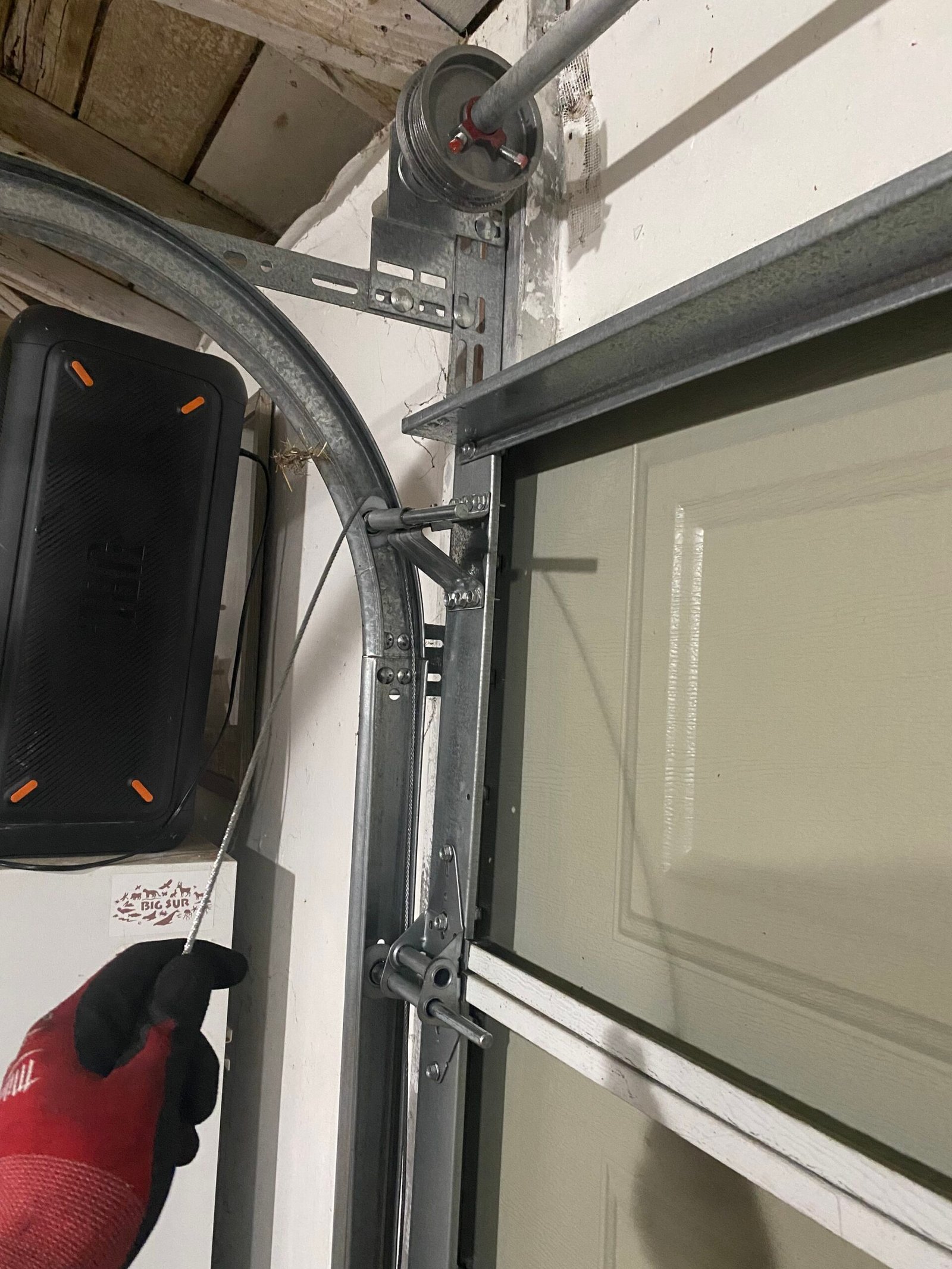
DASMA warns that lift cables associated with the spring system are under high tension and should be replaced by trained door-system personnel when worn or damaged.
Do not attempt to eliminate cable noise by loosening the drum or bottom bracket.
Loose Garage Door Hardware Can Create Rattling and Vibration
Residential garage doors cycle through thousands of movements during their service life.
Vibration can gradually affect ordinary mounting hardware.
Possible sources include:
- Track brackets.
- Opener mounting hardware.
- Door reinforcement hardware.
- Hinge fasteners.
- Non-tension support fasteners.
A light metallic rattle that changes when a bracket vibrates can sound very different from a grinding roller.
Visually inspect hardware from a safe position.
If ordinary accessible mounting hardware is loose, follow the garage-door or opener manufacturer's maintenance instructions.
Do not assume every bolt on a garage door is safe to tighten or remove.
Some hardware is associated with high spring or cable tension.
- Bottom cable brackets.
- Torsion spring winding cones.
- Spring anchor hardware.
- Cable drums.
- Other hardware identified by the manufacturer as high-tension components.
Safe Noisy Garage Door Checks Pasadena Homeowners Can Make
Noise troubleshooting does not require taking the garage door apart.
Start with observation.
1. Listen from outside the moving path
Stand where you can hear the door without placing yourself beneath it.
2. Determine which side is louder
Compare left and right rollers, hinges and tracks.
3. Determine whether the sound comes from above the center
That may move the opener or torsion system higher on the list.
4. Note the exact door position
A pop at one specific height can help locate the hinge or roller involved.
5. Watch each visible roller
Look for wobbling, binding, cracking or a roller that does not turn smoothly.
6. Observe hinges
Look for bending, cracking or unusual movement.
7. Look along the tracks
Check for obvious dents, bends or contact marks.
8. Observe the spring
Look from the floor for a visible torsion-spring gap, significant corrosion or abnormal position.
9. Look at lift cables
Do not touch them. Simply look for fraying, slack or displacement.
10. Listen to the opener separately
Determine whether the powerhead, rail, chain, belt or trolley is the actual source of the noise.
11. Watch door alignment
The bottom edge should remain reasonably level during normal travel.
12. Stop if noise accompanies unstable movement
A crooked, falling, off-track or suddenly heavy door requires more than noise troubleshooting.
What Parts of a Noisy Garage Door Should Be Lubricated?
Lubrication can help appropriate moving components operate more smoothly, but it should be targeted.
DASMA's maintenance guidance recommends visually checking hinges, rollers, springs and door panels for wear or damage and notes that certain parts may require periodic lubrication according to manufacturer instructions.
Genie likewise identifies lubrication as part of garage-door maintenance and notes that appropriate lubrication can reduce wear and loud noises.
Components that may require lubrication depending on design
- Hinge pivot points.
- Serviceable roller bearings.
- Door bearings.
- Specified torsion-system bearing points.
- Manufacturer-approved opener-drive components.
Follow opener-specific instructions
A screw-drive opener, chain-drive opener and belt-drive opener do not necessarily use the same lubrication procedure.
Genie specifically cautions that a belt-drive operator should not simply be treated the same as a chain-drive opener for lubrication purposes.
Do not coat the tracks in grease
Garage-door tracks should remain clean and properly aligned.
Heavy grease can collect dirt and does not correct a bent track, worn roller or alignment problem.
Do not use lubrication as a structural repair
Lubricant cannot repair:
- A cracked roller.
- A broken hinge.
- A bent track.
- A frayed cable.
- A broken spring.
- A stripped opener gear.
- A distorted garage-door section.
If the noise is caused by a worn or damaged component, the appropriate repair may involve correcting that component rather than simply reducing friction temporarily.
Garage Door Noise Comparison: What Different Sounds May Mean
| Noise | Possible Sources | Useful Observation | Safe Homeowner Check | When Inspection Makes Sense |
|---|---|---|---|---|
| Grinding | Roller bearings, track contact, opener gears, screw-drive carriage | Locate exact side or opener area | Observe rollers and track contact | If grinding persists or movement changes |
| Squeaking | Hinges, rollers, springs, bearing points | Find which joint moves when sound occurs | Visual inspection and manufacturer-approved maintenance | If lubrication does not help or damage is visible |
| Popping | Spring coils, hinges, panels, rollers | Note whether pop occurs at one exact height | Look for spring gap, damaged hinge or panel flex | If accompanied by balance or movement changes |
| Rattling | Loose hardware, opener mounting, chain, track brackets | Watch which component vibrates | Visual inspection of ordinary mounting hardware | If rattling becomes severe or hardware is unstable |
| Scraping | Track contact, roller, panel edge, hinge | Look for visible contact marks | Observe track and roller clearance | If metal is visibly rubbing |
| Slapping | Loose opener chain or moving hardware | Listen along opener rail | Compare with owner's manual | If chain tension or drive condition is unclear |
| Humming | Opener motor, excessive door load, stalled drive | Determine whether trolley and door move | Observe rather than repeatedly cycling | If opener cannot produce normal movement |
| Loud bang | Possible spring failure or sudden hardware movement | Check whether door became heavy afterward | Visual spring inspection from floor | Yes if spring failure is suspected |
| Clicking | Roller, hinge, opener relay, cable/drum area | Determine whether sound follows door movement | Observe visible components | If clicking is new and repetitive |
| Rumbling | Worn rollers or bearings | Listen near roller track | Watch roller rotation | If rollers wobble or bind |
Is a Loud Garage Door Dangerous?
Noise by itself does not prove that a garage door is unsafe.
A light squeak from a serviceable hinge is very different from grinding combined with a roller leaving the track.
The best question is:
Is the noise accompanied by a change in the way the garage door moves, balances or supports itself?
Stop operating the door and seek further inspection when noise occurs with:
- A visibly broken spring.
- A loose or frayed cable.
- A roller outside the track.
- A severely crooked garage door.
- A track separating from its mounting.
- Unexpected dropping.
- Rapid movement.
- A door that has become dramatically heavier.
- Severe panel deformation.
- Smoke, burning smell or electrical overheating from the opener.
These are no longer simple “quiet the door” situations.
The system needs to be evaluated according to the underlying mechanical or electrical condition.
Why Does My Garage Door Get Louder Over Time?
Garage doors contain many moving components, so noise can gradually change as normal wear accumulates.
Several things can happen at the same time:
- Roller bearings develop wear.
- Hinge pivots become dry.
- Ordinary mounting hardware loosens.
- Opener chains develop additional movement.
- Track alignment changes slightly.
- Door sections develop more vibration.
- Opener drive components age.
The change may be gradual enough that homeowners do not notice it until the sound becomes significantly different from a neighboring garage door or begins carrying into an adjacent room.
This is one reason routine observation is useful.
Homeowners do not need decibel measurements. Simply knowing what the door normally sounds like makes a new grind, pop or rattle easier to recognize.
Why Does My Garage Door Make Noise Only When Opening?
A noise that occurs only during opening provides a useful diagnostic clue.
During opening, the spring system is helping counterbalance the garage-door weight while the opener pulls the door upward.
Potential opening-only noise can involve:
- A roller binding as it enters the curved track.
- A hinge pivoting under load.
- A spring or bearing point.
- An opener drive component experiencing higher load.
- A cable or drum behaving differently under lifting tension.
If the opener strains while the door rises and the door has also become unusually heavy, spring or balance problems deserve attention.
If the noise occurs at the same height every time, inspect what component reaches that area of the track at that moment.
Why Does My Garage Door Make Noise Only When Closing?
Closing places different mechanical relationships through the system.
Springs load as the door descends. Rollers move through the curved track in the opposite direction. Hinges change angle. The opener controls downward travel while monitoring safety and resistance conditions.
Closing-only noise can involve:
- Rollers binding in the curved track.
- A hinge changing angle.
- A spring loading.
- A cable winding onto the drum.
- Bottom-door contact.
- Track alignment.
- Opener drive movement.
If the garage door closes crooked or one cable becomes visibly slack, discontinue operation rather than repeatedly listening for the source.
If the door remains mechanically smooth but reverses because the closing path is not being recognized correctly, the problem may belong to the safety-sensor system rather than the source of the mechanical noise.
When Should a Noisy Garage Door Be Professionally Inspected?
Some garage-door noises can be addressed through ordinary maintenance. Others indicate physical wear, alignment changes or a high-tension component that should not be adjusted by a homeowner.
Consider professional inspection when:
- Grinding persists after obvious maintenance issues are ruled out.
- A roller is cracked, seized or visibly worn.
- A hinge is bent or damaged.
- The track is visibly bent.
- The garage door becomes crooked.
- A cable is frayed, loose or displaced.
- A spring shows a visible gap.
- There was a loud bang followed by heavy door movement.
- The opener grinds internally.
- The chain repeatedly slaps the rail.
- The door jerks or stops at one position.
- The garage door has become unusually heavy.
- Noise is accompanied by substantial vibration.
- A track or opener mounting bracket is unstable.
- Lubrication briefly quiets the system but the noise immediately returns.
Pasadena Garage Door Repair Experts can be contacted at (626) 415-3641 to describe the sound and ask about current garage-door service availability.
Noisy Garage Doors in Pasadena Homes: Local Factors That Can Matter
Pasadena contains a wide mix of residential properties, including older homes, updated homes, attached garages and detached garages.
That matters because garage-door noise is partly mechanical and partly about how sound is transmitted through the property.
Attached garages can make normal vibration more noticeable
A ceiling-mounted garage door opener installed below or beside living space can transfer motor and rail vibration into framing.
A chain-drive opener that seems perfectly acceptable in a detached garage may feel much louder when mounted below a bedroom or living area.
That does not necessarily mean the opener is defective.
It means sound transmission and homeowner comfort are relevant when evaluating whether maintenance, repair or a different opener design is worth considering.
Older garage-door systems
Older Pasadena properties can have garage doors that have been modified over time.
A newer opener may have been installed on older rollers, hinges and tracks.
In that situation, replacing the opener does not automatically eliminate door-hardware noise.
Dust and dry garage conditions
Pasadena garages can accumulate dust and fine debris, particularly when the garage is used for storage, workshops, household projects or landscaping access.
Dust does not automatically cause garage-door failure, but dirty components can complicate lubrication and roller movement.
Frequent daily use
A household that uses the garage as the main entrance cycles the door more often than a household using a detached garage only occasionally.
More cycles mean more repeated movement at rollers, hinges, springs and the opener.
Pasadena neighborhood context
Residential context may naturally include Old Pasadena, Bungalow Heaven, Hastings Ranch, Madison Heights and San Rafael Hills.
Those references describe Pasadena residential settings and do not imply separate Pasadena Garage Door Repair Experts locations.
The primary geographic entity remains Pasadena, California 91105, within Los Angeles County and the San Gabriel Valley.
How Much Does Noisy Garage Door Repair Cost in Pasadena?
Noisy garage-door repair cannot responsibly be represented with one fixed price because the sound is a symptom rather than a specific repair.
A squeaking hinge and an internally grinding garage-door opener are completely different scopes of work.
Cost can vary according to:
- The actual failed component.
- Whether the problem is maintenance or physical damage.
- Number and type of rollers.
- Roller bearing design.
- Hinge condition.
- Track alignment or damage.
- Spring-system condition.
- Cable and drum condition.
- Garage-door opener make and model.
- Drive system.
- Internal opener parts.
- Door dimensions and weight.
- Panel condition.
- Parts required.
- Labor required.
- Installation complexity.
- Additional mechanical issues discovered during diagnosis.
A homeowner should ask what component is producing the noise before approving replacement parts.
The goal is not merely to make the garage quieter for several days. The goal is to determine whether the sound represents friction, wear, misalignment, vibration or another mechanical condition and address the actual cause where appropriate.
Can Maintenance Make a Garage Door Quieter?
Yes, routine maintenance can reduce certain garage-door noises when the system is fundamentally in good condition.
Maintenance may help when noise comes from:
- Dry hinge pivots.
- Serviceable roller bearings.
- Specified spring or bearing points.
- Loose ordinary mounting hardware.
- Manufacturer-specified opener-drive maintenance.
Manufacturer guidance matters.
LiftMaster's maintenance schedule for supported residential chain-drive openers calls for manually checking whether the door is balanced and binding, testing operation and periodically oiling door rollers, bearings and hinges.
Genie likewise recommends keeping the garage door in good repair, properly lubricated and balanced when troubleshooting noisy operation.
Maintenance should therefore be thought of as preserving normal operation, not masking mechanical damage.
A garage door that remains noisy after appropriate maintenance deserves further diagnosis.
Can Replacing Garage Door Rollers Make the Door Quieter?
It can when worn or inherently noisy rollers are a major source of the sound.
Roller replacement should still follow diagnosis.
If the noise actually comes from:
- The opener chain.
- A bent track.
- A damaged hinge.
- A spring.
- A loose mounting bracket.
replacing all rollers may produce little improvement.
Look for physical roller evidence such as:
- Cracking.
- Wobbling.
- Seized rotation.
- Rough bearings.
- Excessive side play.
- Visible wheel wear.
The correct roller also needs to be compatible with the garage door and track system.
Does a Loud Garage Door Mean the Opener Needs Replacement?
No.
The opener should not be blamed until the location of the sound is identified.
A garage-door opener may be working normally while:
- Rollers grind.
- Hinges squeak.
- Tracks rattle.
- Springs pop.
- Sections vibrate.
Conversely, a quiet garage door can be attached to an opener with worn internal gears.
Opener replacement becomes worth discussing when diagnosis shows significant opener-related failure or when a homeowner wants a different drive type or sound profile.
If reducing vibration is a homeowner priority, belt-drive or compatible wall-mount systems may be worth comparing with some chain-drive configurations.
That is an upgrade decision and should not be presented as proof that every noisy chain-drive opener is defective.
Noisy Garage Door Red Flags
Be cautious when a noise diagnosis is based on assumptions rather than inspection.
Potential red flags include:
- Replacing the opener without listening to where the noise comes from.
- Replacing springs solely because a hinge squeaks.
- Spraying heavy grease into the garage-door tracks.
- Lubricating a cracked roller instead of addressing physical damage.
- Ignoring a frayed lift cable because the main complaint is noise.
- Ignoring a visibly crooked garage door.
- Increasing opener force to push through grinding resistance.
- Recommending a new garage door because one roller is noisy.
- Ignoring loose track or opener mounting.
- Giving homeowners DIY torsion-spring adjustment instructions.
- Loosening bottom brackets to address cable-related noise.
- Quoting unrelated parts without explaining why they are needed.
A useful diagnosis should connect the sound with the component or condition producing it.
What If the Door Is Noisy and Also Reverses or Refuses to Close?
Noise and closing problems can occur at the same time without having the same cause.
A grinding roller or squeaking hinge is mechanical. A safety-sensor problem involves the opener's monitored closing path.
If the garage door remains mechanically level and smooth but refuses normal closing, opens normally, reverses near the beginning of downward travel or shows abnormal photo-eye indicator lights, investigate the safety-sensor system separately.
Our Pasadena guide to garage door sensor problems explains how alignment, sunlight interference, blocked beams and low-voltage wiring can affect automatic closing.
That distinction helps avoid using lubrication or mechanical parts to solve a closing-safety problem that originates in the sensor system.
Questions to Ask Before Approving Noisy Garage Door Repair
Homeowners should understand what is producing the sound.
Useful questions include:
- Where exactly is the noise coming from?
- Is the sound produced by the garage door or the opener?
- Are the rollers worn?
- Are any roller bearings damaged?
- Are hinges cracked or bent?
- Are the tracks aligned?
- Is a roller rubbing the track?
- Is the garage door properly balanced?
- Are springs showing damage?
- Are the lift cables in good condition?
- Are cable drums operating normally?
- Is the opener chain properly configured for the model?
- Is an internal opener component worn?
- Which components require lubrication?
- Which components should not be lubricated?
- Is a part physically damaged rather than simply dry?
- Does the noise affect safe garage-door operation?
- What parts and labor are being recommended?
California homeowners can also review the California CSLB D-28 Doors, Gates and Activating Devices classification when researching California contractors involved with door and activating device work.
This article does not make a particular licensing claim about Pasadena Garage Door Repair Experts. Current contractor information should be independently verified where applicable.
Why Consider Pasadena Garage Door Repair Experts for a Noisy Garage Door?
Pasadena Garage Door Repair Experts serves residential garage-door customers throughout Pasadena, California.
A useful noisy-door inspection should determine whether the sound originates from routine maintenance needs or a physically worn or damaged component.
Relevant diagnosis may include:
- Noisy garage door troubleshooting.
- Garage door roller inspection.
- Garage door hinge inspection.
- Track alignment diagnosis.
- Garage door spring inspection.
- Cable and drum inspection.
- Garage door opener noise diagnosis.
- Garage door roller replacement where appropriate.
- Garage door maintenance and tune-up where appropriate.
The useful objective is not simply making the door quieter. It is identifying whether grinding, squeaking, popping or rattling represents normal movement, maintenance needs, mechanical wear or a condition that can affect operation.
Visit Pasadena Garage Door Repair Experts or call (626) 415-3641 to describe the garage-door noise and ask about current service availability.
Pasadena Noisy Garage Door Service Area
The primary geographic focus is Pasadena, California 91105, within Los Angeles County and the San Gabriel Valley.
Pasadena residential context may naturally include Old Pasadena, Bungalow Heaven, Hastings Ranch, Madison Heights and San Rafael Hills.
These neighborhood references provide geographic context and do not imply separate Pasadena Garage Door Repair Experts offices.
Homeowners can call (626) 415-3641 to ask about current garage-door service availability for their Pasadena property.
Frequently Asked Questions About Loud and Noisy Garage Doors
Why is my garage door suddenly much louder than before?
A sudden increase in garage-door noise can indicate a change in rollers, hinges, track alignment, spring movement, opener-drive components or mounting hardware. First identify whether the sound is grinding, squeaking, popping or rattling and whether door movement has also become slower, crooked, jerky or unusually heavy.
What causes a garage door to make a grinding noise?
Grinding commonly involves friction or worn moving components. Possible sources include roller bearings, a seized roller, track contact, opener gears, screw-drive components or other parts that are binding rather than moving smoothly.
Why does my garage door squeak when opening and closing?
Squeaking commonly comes from moving joints such as hinges, roller bearings, springs or other serviceable bearing points. Appropriate manufacturer-recommended lubrication may help when the component is otherwise in good condition. Persistent noise can indicate wear or misalignment that requires further inspection.
Why does my garage door make a popping sound?
Popping can come from spring-coil movement, hinges, rollers, section flexing or hardware shifting under load. A single extremely loud bang followed by a heavy garage door or opener strain can indicate a broken torsion spring and should be inspected from a safe distance.
Why is my garage door rattling?
Rattling commonly involves vibration from ordinary mounting hardware, track brackets, opener mounting, chain movement or door sections. The source should be located before anything is tightened because some garage-door hardware is connected to high-tension spring or cable systems.
Should I lubricate my garage door tracks if they are noisy?
Generally, the tracks themselves should remain clean and properly aligned rather than coated in heavy grease. Manufacturer guidance commonly focuses lubrication on appropriate roller bearings, hinges and specified moving components. Track noise should be checked for roller wear, alignment or physical contact.
Can worn garage door rollers make a lot of noise?
Yes. Worn, cracked, seized or rough roller bearings can produce grinding, rumbling, squeaking and rattling. Lubrication may help a serviceable bearing, but it cannot repair a cracked wheel, bent stem or physically worn bearing.
Can a garage door spring make a popping or squeaking noise?
Yes. Springs can produce squeaking or popping during operation, and squeaking alone does not necessarily mean a spring is failing. The sound becomes more concerning if the door also becomes unusually heavy, unbalanced or uneven, or if a torsion spring shows a visible gap.
Why is my garage door opener making a grinding sound?
Opener grinding can involve worn gears, sprockets, a screw-drive carriage, trolley or other internal drive parts. The garage door itself should also be checked because a broken spring or binding door can place abnormal load on a functioning opener.
Is a chain-drive garage door opener supposed to be louder?
Chain-drive openers can produce more audible mechanical sound and vibration than many belt-drive systems. Normal chain sound is different from a sudden new rattle, chain slap, grinding or severe vibration, which should be compared with the opener manufacturer's maintenance instructions.
When should I stop using a noisy garage door?
Stop operating the door when noise is accompanied by a broken spring, loose or frayed cable, roller outside the track, severely crooked door, unexpected dropping, significant track movement or other instability. Those conditions require more than routine noise maintenance.
Who can inspect a noisy garage door in Pasadena?
Pasadena homeowners can contact Pasadena Garage Door Repair Experts at (626) 415-3641 to describe grinding, squeaking, popping, rattling or other garage-door noises and ask about current service availability.
Find Pasadena Garage Door Repair Experts on Google Maps
You can also view Pasadena Garage Door Repair Experts on Google Maps .
Is Your Garage Door Grinding, Squeaking, Popping or Rattling in Pasadena?
Start by listening for the type and location of the sound. A squeaking hinge, worn roller, rattling opener chain, spring noise and track-binding problem can all sound different and require different solutions.
If the noise is accompanied by crooked movement, a heavy garage door, visible spring damage, a loose cable, a roller leaving the track or persistent opener grinding, avoid repeatedly cycling the system until the cause is identified.
Call Pasadena Garage Door Repair Experts at (626) 415-3641 to describe the sound and ask about current garage-door service availability in Pasadena, California.
Safety reminder: do not adjust torsion springs, winding cones, cable drums, lift cables, bottom brackets or unstable off-track garage doors while attempting to eliminate noise.
Related Pasadena Garage Door Topics
- Garage Door Sensors Not Working? How to Diagnose Alignment, Sunlight and Wiring Problems
- The Pasadena Garage Door Maintenance Checklist: Springs, Rollers, Tracks, Cables and Opener
- What Does a Garage Door Tune-Up Include—and How Often Should Pasadena Homeowners Get One?
- 10 Warning Signs Your Garage Door Spring Is About to Break
- Garage Door Came Off Track in Pasadena? What to Do—and What Not to Do