Why Won’t My Garage Door Open in Pasadena? 9 Common Causes and What to Do
A garage door that suddenly refuses to open can have several possible causes. The problem may be as simple as a disconnected opener or loss of electrical power, or it may involve a broken spring, damaged lift cable, off-track roller, engaged manual lock, or another mechanical condition that should not be handled as a DIY repair.
This guide from Pasadena Garage Door Repair Experts explains the most common reasons a residential garage door may stay closed, what Pasadena homeowners can safely observe, and when professional garage door diagnosis is the safer next step.

Why Won’t My Garage Door Open?
A garage door may refuse to open because the spring system has failed, the opener has lost power, the opener controls are not communicating, the trolley has been disconnected, an opener component has failed, a lift cable is damaged, the door has moved off track, a manual lock is engaged, or the door is mechanically binding.
The symptom alone does not identify the failed component. For example, an opener that hums while the door barely rises can look like an opener failure even when a broken spring has made the door too heavy for the opener. A crooked door may point toward a cable or track problem. A completely silent opener may indicate a power or control issue.
The safest approach is to identify what the door is doing before replacing parts. Homeowners can make several visual and electrical checks without touching high-tension components, but springs, cable drums, damaged lift cables, and seriously off-track doors should be left alone until the system can be inspected safely.
Start With the Symptom, Not With a Guess
When a garage door will not open, many homeowners immediately assume the garage door opener has failed. That is understandable because the opener is the motorized component that responds when the remote or wall button is pressed. However, the opener is only one part of the complete garage door system.
A residential sectional garage door relies on a counterbalance system. Springs help offset the weight of the door. Lift cables and drums transfer that spring force as the door travels. Rollers guide the sections through the tracks. Hinges allow the panels to move around the curved portion of the track. The opener then moves a properly functioning, reasonably balanced door through its travel.
This distinction matters. If a spring breaks, the opener should not be expected to lift the full dead weight of the door. If a cable has jumped a drum, the door may rise unevenly. If a roller has left the track, forcing the opener can make the alignment problem worse. If the door is manually locked, the opener may strain against a door that physically cannot move.
That is why effective troubleshooting begins with basic observations: Is the opener making any sound? Does the opener light come on? Does the door rise an inch or two and stop? Is one side higher than the other? Is there a visible gap in a torsion spring? Is a cable hanging loose? Is the door still sitting squarely in both tracks?
These observations help narrow the possibilities without requiring a homeowner to dismantle the system.
1. A Garage Door Spring Is Broken or No Longer Counterbalancing the Door
A broken or badly weakened garage door spring is one of the most important mechanical reasons a garage door may not open. The spring system counterbalances much of the door's weight. When that system fails, the door can become extremely heavy and an automatic opener may only lift it a few inches, strain, reverse, or stop.
Most modern residential garage doors use torsion springs mounted above the door opening, although some systems use extension springs located along the horizontal tracks. The exact configuration varies by door, but the basic purpose is similar: the spring system stores mechanical energy and helps offset the door's weight as it moves.
A homeowner may first notice a loud bang from the garage and assume something fell. Later, the opener may run but the door barely moves. With a torsion spring, a visible separation or gap in the spring coil may be apparent above the door. With extension springs, one spring may appear stretched, disconnected, or broken.
Another clue is opener strain. If the opener previously moved the door normally but now struggles immediately after the door begins rising, the opener itself may not be the root problem. A failed counterbalance system can dramatically increase the load being placed on the opener.
The Door & Access Systems Manufacturers Association publishes consumer safety guidance warning that garage door springs are high-tension components and recommending professional attention when springs or related high-tension parts are damaged. Homeowners can review the DASMA garage door safety tips for broader industry safety information.
- Wind or unwind torsion springs.
- Loosen winding cones or spring anchor hardware.
- Remove bottom brackets connected to the cable system.
- Use improvised bars or tools to tension a spring.
- Force the opener to repeatedly lift a door with a failed spring.

A broken spring does not automatically mean the entire garage door needs replacement. Springs are serviceable mechanical components. The appropriate repair depends on the door, spring configuration, door weight, condition of the remaining hardware, and whether other components were damaged when the spring failed.
2. The Garage Door Opener Has Lost Electrical Power
If the opener is completely silent and its lights or displays are off, start by determining whether it has electrical power. A power interruption is one of the few garage-door problems a homeowner can often investigate without touching the mechanical door system.
Check whether the opener is plugged into its ceiling or wall receptacle. If the plug is secure, determine whether other electrical devices in the garage have power. A tripped circuit breaker, tripped GFCI-protected circuit, disconnected plug, or local utility outage can leave the opener unresponsive even though there is nothing mechanically wrong with the door.
Pasadena homeowners who suspect a local electrical interruption can check the official Pasadena Water and Power outage map. That source is useful for determining whether the issue may extend beyond the garage rather than assuming the opener has failed.
If electrical service is available elsewhere in the garage but the opener remains dead, the problem may be at the receptacle, wiring, opener power supply, logic board, motor circuitry, or another electrical component. At that point, diagnosis should move beyond simply replacing a remote battery.
If a power outage occurs while the garage door is closed, many opener systems include a manual release mechanism. However, disconnecting the opener does not fix a broken spring or damaged cable. The door should be mechanically sound before anyone attempts to move it manually.
Be especially cautious if the door feels unusually heavy, appears crooked, has a loose cable, or has a visible broken spring. Those clues suggest that lack of opener power may not be the only issue.
3. The Remote, Keypad, or Wall Control Is Not Communicating With the Opener
If the opener works from one control but not another, the garage door itself may be fine and the problem may be limited to the control device.
A remote transmitter can stop working because of a depleted battery, programming issue, damaged button, interference, or loss of pairing. A wireless keypad can have similar problems. If the remote fails but the hardwired wall control still operates the door normally, that comparison provides useful diagnostic information.
Likewise, if neither handheld remote works but the wall button does, a mechanical failure in the door is less likely. If the wall control also fails, attention shifts toward opener power, control wiring, lock/vacation mode, logic-board issues, or the opener itself.
Safe checks homeowners can make
- Try the wall-mounted control.
- Replace the remote battery with the correct type.
- Check whether the opener's vacation or lock mode has been activated.
- Confirm that the opener has electrical power.
- Look for obvious damage to the wall-control wire without removing electrical components.
Avoid randomly reprogramming every control before checking the basics. Doing so can create a second problem and make diagnosis more confusing.
Another important distinction concerns photo-eye sensors. Homeowners often assume the safety sensors are the cause of every opener problem. In most conventional residential systems, photo-eye obstruction is primarily associated with closing safety, not a door's inability to begin opening. If a door will open normally but refuses to close, sensor alignment becomes much more relevant.
The U.S. Consumer Product Safety Commission explains that automatic residential garage door operators are covered by the federal safety requirements in 16 CFR Part 1211 for automatic residential garage door operators. Safety systems should not be bypassed to make a malfunctioning opener operate.
4. The Emergency Release or Opener Trolley Has Been Disconnected
If the opener motor runs and the rail mechanism moves but the garage door stays closed, the trolley may be disconnected from the door.
Most automatic garage door openers have a manual release mechanism that allows the door to be disconnected from the opener. This feature can be useful during a power interruption or when manual operation is necessary. Depending on the opener design, pulling the release changes the connection between the door arm and the moving trolley.
A homeowner may discover this after someone has intentionally pulled the release cord, after previous service, or after the mechanism was not properly re-engaged.
The important question is why the door was disconnected. If it was simply released during an outage and the door is mechanically healthy, reconnecting it according to the opener manufacturer's instructions may restore operation. If it was disconnected because the door had become heavy, crooked, jammed, or difficult to move, reconnecting the opener without addressing the mechanical problem can place additional stress on the system.
Before reconnecting a trolley, visually inspect the door for a broken spring, loose cables, displaced rollers, bent track, damaged panels, or another condition that could interfere with safe movement.
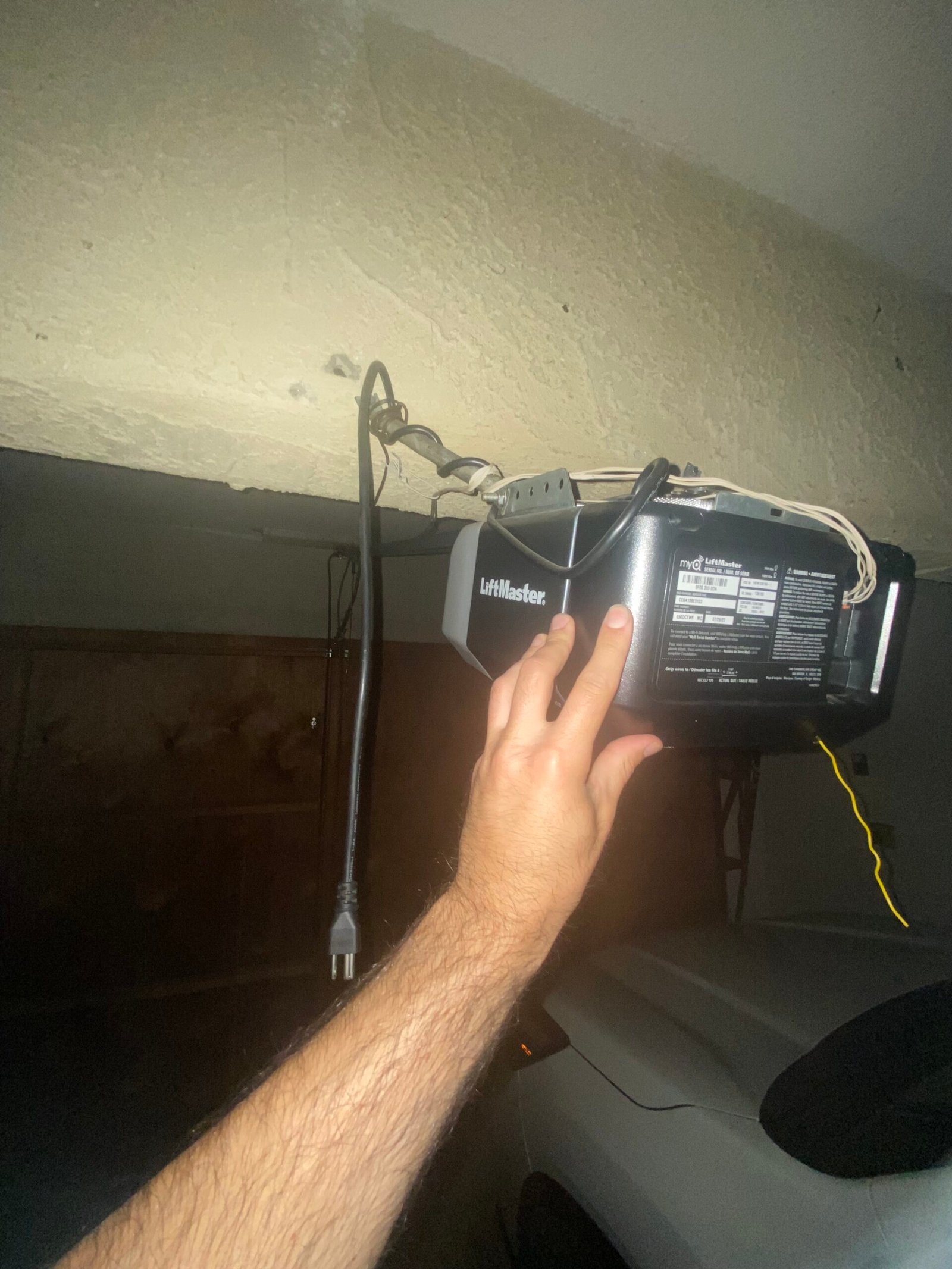
5. The Garage Door Opener Has an Internal Mechanical or Electronic Failure
If electrical power and controls are working but the opener cannot move an otherwise functional door, the opener itself may need diagnosis.
Residential openers contain several components that can wear or fail, depending on the model. These may include a motor, drive gear, sprocket, belt or chain drive components, trolley, travel mechanism, control board, capacitor, RPM sensor, limit system, or other model-specific parts.
Symptoms vary. The opener may hum without moving. The motor may run while the chain or belt remains stationary. The trolley may travel without properly engaging the door. The opener may stop at the same point repeatedly. It may click but fail to start. In other situations, there may be intermittent operation rather than complete failure.
The critical diagnostic step is separating an opener failure from a door-balance failure.
If a broken spring has made the garage door extremely heavy, replacing the opener motor does not correct the underlying problem. If the rollers are binding in damaged track, increasing opener force is not a proper substitute for repairing the mechanical resistance. An opener should move a door that is correctly counterbalanced and mechanically capable of traveling through the tracks.
Signs the opener itself deserves closer inspection
- The opener receives power but will not activate.
- The motor runs but the drive mechanism does not move correctly.
- The trolley moves while the door remains disconnected.
- The opener stops inconsistently despite a door that moves freely.
- Controls work intermittently from multiple locations.
- Visible drive components are damaged or excessively loose.
Model-specific troubleshooting should follow the manufacturer's instructions. Avoid increasing force settings merely to overpower resistance in the door. Excessive resistance is a reason to inspect the door system, not simply command the opener to work harder.
6. A Lift Cable Is Broken, Loose, Frayed, or Off the Drum
A damaged garage door cable can prevent normal opening and may cause the door to lift unevenly or become crooked.
In a torsion-spring system, lift cables typically run from the bottom brackets of the garage door to cable drums located near the torsion shaft. The cables and drums work with the spring system to transfer lifting force as the door moves.
If one cable breaks, becomes slack, jumps off a drum, or loses proper tension, one side of the door may rise differently from the other. The door can wedge in the tracks, tilt, or stop after moving only a short distance.
A homeowner may see a cable hanging loosely near the side of the door or notice that one side has lifted several inches while the opposite side remains lower. In other cases the problem is at the drum above the door and is not obvious from the floor.
Do not pull on a loose cable or attempt to wind it back onto a drum. Cable tension is related to the spring system, and bottom brackets can also be connected to high-tension components.
DASMA's consumer safety guidance specifically recommends visual inspection of garage-door cables for fraying or wear while cautioning that cable replacement associated with the spring system should be handled by trained personnel.
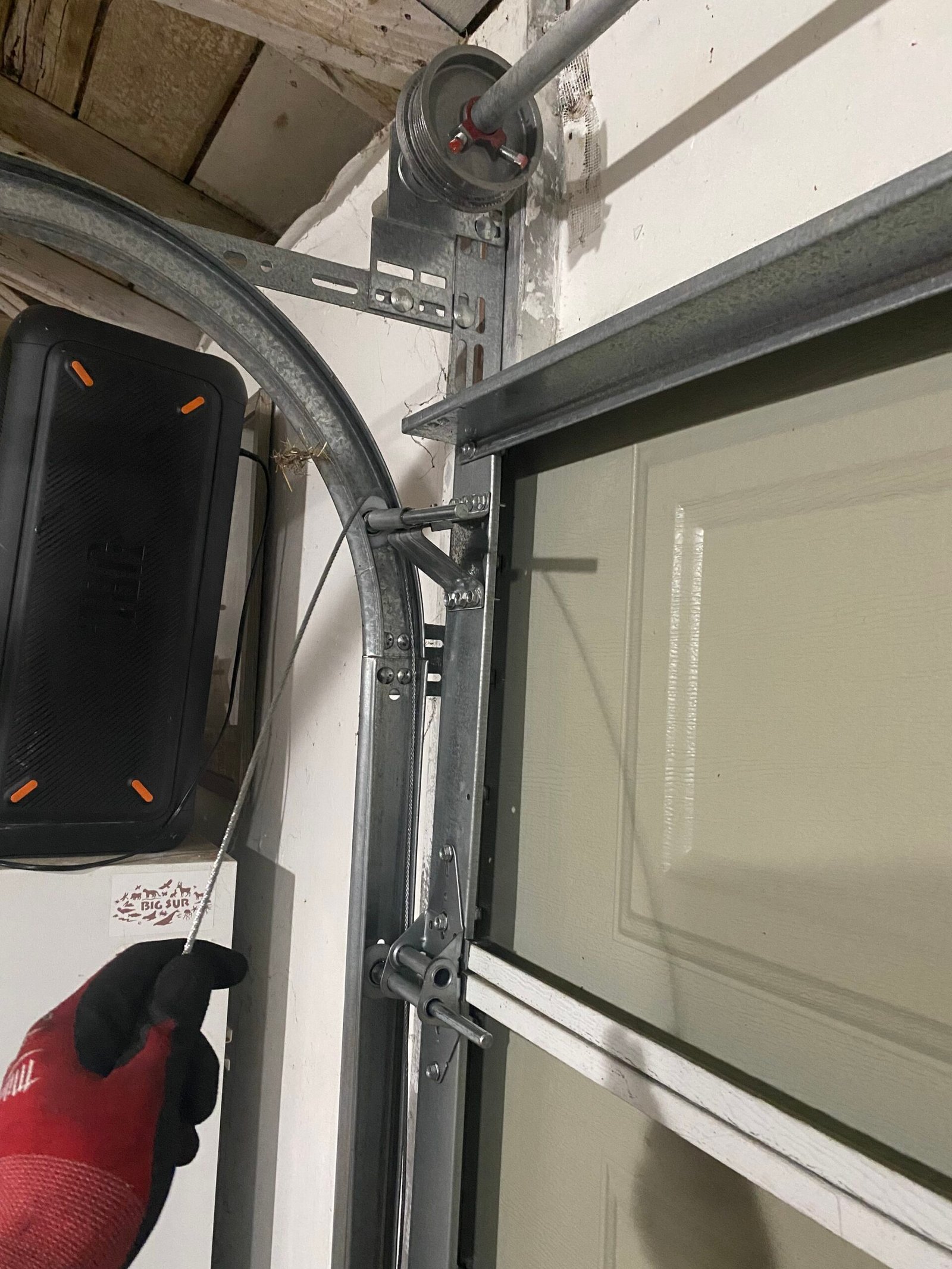
A cable problem is another example of why a garage door that will not open should not automatically be diagnosed as an opener problem. The motor may be working perfectly while the mechanical door is unable to travel safely.
7. A Roller Has Come Out of the Track or the Track Is Bent or Misaligned
An off-track or badly misaligned garage door can bind hard enough that the opener cannot lift it.
Sectional garage doors travel on rollers that move through vertical and horizontal tracks. For normal movement, the rollers need to remain properly seated while the track geometry keeps the door aligned through the opening and overhead travel.
Track problems can develop after vehicle impact, loose mounting hardware, cable failure, worn rollers, hinge problems, or another mechanical event that pulls the door out of square.
Symptoms may include scraping, a visible roller outside the track, a door that leans to one side, a gap between a roller and track, a sharply bent track section, or a door that begins rising and then binds.
Repeatedly pressing the opener button is not a good troubleshooting method when the door is visibly crooked. Each attempt may load the tracks, rollers, hinges, panels, opener arm, and cable system in ways they were not designed to handle.
- A roller is visibly outside the track.
- One side of the door is significantly higher than the other.
- A lift cable is loose or hanging.
- The track is sharply bent.
- The door is twisting or threatening to leave the opening.
Minor track alignment and severe off-track conditions are not the same repair. Proper diagnosis should identify what caused the misalignment rather than merely pushing a roller back into position. If a cable or hinge problem caused the door to leave the track, that underlying component also needs attention.
8. The Manual Garage Door Lock or Side Latch Is Engaged
A manually locked garage door can make a functioning opener appear broken.
Some residential doors include slide locks or center-locking mechanisms that physically prevent the door from moving. These are especially relevant on doors that were originally designed for manual operation or that have retained manual hardware after an automatic opener was installed.
If the opener strains, the rail flexes, or the door moves slightly and immediately stops, inspect the inside of the door for an engaged side lock before assuming that a spring, opener, or cable has failed.
Do not repeatedly activate the opener against a locked door. An automatic opener applies force through the door arm and top section. If the door is mechanically secured to the track, repeated activation can unnecessarily stress the opener, door reinforcement, track, or locking hardware.
This is one of the simplest garage door problems to identify visually. If a manual lock is clearly engaged and the rest of the system appears normal, release the lock according to its intended operation before testing the opener again.
If the lock is not engaged or the door still will not move after it has been released, continue diagnosis rather than forcing the door.
9. The Garage Door Is Binding Because of Rollers, Hinges, Panels, Hardware, or Another Obstruction
Not every garage door that refuses to open has one dramatic broken part. General mechanical resistance can also stop the door.
Worn rollers can drag through the tracks. A damaged hinge can alter how the sections move. A bent panel may contact the track or opening. Loose hardware can shift a track bracket. A foreign object can interfere with a roller. A damaged bottom section can catch at the floor or jamb. Multiple smaller issues can combine to create enough resistance that the opener stops.
Listen carefully to what happens as the door begins to move. Scraping suggests a different category of problem from a completely silent opener. A repeating pop at the same height may indicate a roller, hinge, track, or panel issue. A door that visibly flexes or twists should not be repeatedly cycled.
A homeowner can safely look for obvious physical contact points without placing hands near rollers, hinges, cables, or pinch points while the door is moving.
Do not spray lubricant indiscriminately onto every garage door component in an attempt to free a stuck door. Lubrication can be appropriate for certain moving parts when performed according to manufacturer recommendations, but it does not repair a bent track, broken hinge, damaged cable, failed spring, or structurally distorted panel.
If the cause is not visually obvious, the next step is a systematic inspection of the door's balance, spring system, cables, rollers, hinges, tracks, opener connection, and travel.
Safe Things Pasadena Homeowners Can Check Before Calling for Garage Door Repair
A garage door is one of the largest moving systems in a home, so troubleshooting should focus on observation rather than disassembly. Several basic checks can help narrow the problem without touching high-tension components.
1. Check whether the opener has power
Look for lights, display indicators, or sound from the opener. Confirm that it is plugged in and determine whether other electrical devices in the garage are working.
2. Try the wall control
If a handheld remote does not work, try the hardwired wall control. A door that works from the wall button but not the remote points toward a transmitter, battery, programming, or wireless-control issue rather than a broken door.
3. Look for a visible spring gap
From a safe distance, look above the closed door for an obvious separation in a torsion spring. Do not touch, loosen, or attempt to reposition the spring.
4. Look at the lift cables without touching them
Compare the left and right sides. A cable hanging loose, visibly frayed, or displaced from its normal path is a reason to stop operating the door.
5. Check whether the door is sitting squarely
Look at the bottom edge of the closed door. If one side is significantly higher than the other, the issue may involve a cable, drum, track, roller, or related mechanical component.
6. Look for a displaced roller or bent track
A roller outside the track or severe track damage should be treated as a mechanical problem, not an invitation to press the opener again.
7. Check the manual lock
Look for an engaged slide lock or other manual locking hardware that physically prevents movement.
8. Listen to the opener
Silence, clicking, humming, motor operation without door movement, and immediate reversal are different symptoms. Note exactly what happens because that information can speed diagnosis.
9. Stop if the door looks unsafe
If the door is crooked, hanging, partly off track, supported unevenly, or associated with a broken spring or damaged cable, do not continue troubleshooting by operating it.
Garage Door Won’t Open: Symptom-to-Cause Comparison
| What You Notice | Possible Causes | Safe Observation | Professional Inspection? |
|---|---|---|---|
| Opener is completely silent | No power, control issue, opener electronics | Check plug, garage power, wall control | If power is present but opener remains dead |
| Door opens only a few inches | Broken spring, excessive resistance, opener load problem | Look for visible spring gap or crooked door | Yes if spring or mechanical resistance is suspected |
| Loud bang followed by heavy door | Broken spring | Observe spring from a safe distance | Yes |
| One side rises higher | Cable, drum, track, roller problem | Observe door alignment and cable condition | Yes |
| Motor runs but door does not move | Disconnected trolley, opener drive failure, mechanical jam | Observe trolley and door position | If reconnection is unclear or door is not mechanically sound |
| Remote fails but wall button works | Remote battery, programming, transmitter issue | Try wall control and another remote | Not always |
| Door is visibly crooked | Cable, track, roller, hinge problem | Stop operation and visually inspect | Yes |
| Roller is outside track | Off-track door, impact, cable or track problem | Do not force door | Yes |
| Opener strains against closed door | Manual lock, broken spring, binding door | Check lock and visible spring condition | If mechanical cause remains |
| Scraping or popping while trying to open | Roller, hinge, track, panel or hardware problem | Listen and observe without touching moving parts | Recommended if resistance persists |
When a Garage Door That Won’t Open Needs Professional Repair
A professional inspection makes sense when the problem involves stored spring tension, load-bearing cables, serious track misalignment, a door that has become unstable, or a fault that cannot be identified through basic observation.
Contact a garage door professional rather than continuing to operate the system when there is a visible broken spring, a loose or frayed lift cable, a roller outside the track, a crooked door, a door that is abnormally heavy, significant track damage, repeated opener strain, or structural panel damage that interferes with travel.
The goal should be diagnosis before parts replacement. A garage door is an interconnected system. The opener, spring system, cables, drums, tracks, rollers, hinges, panels, and controls influence one another.
For example, replacing an opener will not solve a broken spring. Reconnecting a cable without addressing why it jumped the drum may not correct the root problem. Straightening a track without inspecting the cable and roller system can overlook the condition that created the misalignment.
Pasadena Garage Door Repair Experts can be contacted at (626) 415-3641 to ask about current scheduling availability for a garage door that will not open.
Does a Garage Door That Won’t Open Need to Be Replaced?
Usually, a door that will not open does not automatically need complete replacement. Many causes involve individual serviceable components.
Broken springs, damaged lift cables, worn rollers, opener failures, control issues, disengaged trolleys, and many track problems can often be evaluated as component-level repairs. The fact that the door is temporarily inoperable does not by itself establish that the door sections or entire system have reached the end of their useful life.
Replacement becomes more relevant when there is broader structural damage, several damaged sections, extensive deterioration, major impact damage, substantial deformation, recurring failures throughout an aging system, or a homeowner specifically wants a significant change in appearance, insulation, security, or door design.
The decision should be based on the actual condition of the door rather than on a single symptom.
Why Pasadena Conditions Matter When Diagnosing Garage Door Problems
Pasadena garage doors operate in a Southern California environment where regular sun exposure, warm temperatures, garage heat, dust, frequent vehicle use, and age differences between homes can all affect how components wear over time.
Pasadena includes a mix of older and updated residential properties. A garage door at an older Craftsman or bungalow-style home may have a different door configuration, track arrangement, opener history, or hardware age from a newer residential installation. That does not mean older doors are inherently defective; it means diagnosis should account for the actual system in front of the technician rather than assuming every Pasadena home uses the same equipment.
Frequent daily use also matters. A garage door used as a primary household entrance may cycle significantly more often than a door used only occasionally. Springs, rollers, hinges, cables, and opener components are moving parts, so operating history is relevant when investigating a sudden change in performance.
Local context can be referenced naturally throughout Pasadena, including neighborhoods such as Old Pasadena, Bungalow Heaven, Hastings Ranch, Madison Heights, and San Rafael Hills, without implying that the company maintains separate offices in those areas.
The primary service context for this guide remains Pasadena, California 91105 in Los Angeles County and the San Gabriel Valley.
Questions to Ask Before Hiring Someone to Repair a Garage Door That Won’t Open
A useful garage door diagnosis should explain what failed and why that failure is preventing the door from operating. Homeowners do not need to become garage door technicians, but they can ask questions that make the repair recommendation easier to understand.
- What component is preventing the garage door from opening?
- Is the spring system intact?
- Is the door properly counterbalanced?
- Are the lift cables and cable drums in normal condition?
- Are all rollers still properly seated in the tracks?
- Is the opener the actual problem, or is it reacting to a heavy or binding door?
- Is the door structurally damaged?
- Can you show me the failed or worn component?
- Does the complete door need replacement, or is the problem limited to one part?
- What parts and labor are included in the proposed repair?
California homeowners can also use the California Contractors State License Board as an independent contractor-information resource. CSLB describes the D-28 Doors, Gates and Activating Devices contractor classification as covering installation, modification, and repair of various door, gate, and activating-device systems.
This article does not make a licensing claim about Pasadena Garage Door Repair Experts. Licensing or credential questions should be verified using current official information rather than inferred from marketing language.
Garage Door Repair Red Flags
Be cautious when a repair recommendation is made without identifying the cause of the failure. A garage door that will not open is a symptom, not a diagnosis.
Warning signs can include immediately recommending a complete new door without inspecting the spring and cable system, claiming the opener is defective without checking door balance, failing to explain damaged components, repeatedly changing the proposed repair without explanation, providing unsafe DIY instructions around high-tension parts, or pressuring a homeowner to approve work before the problem has been explained.
A useful diagnosis should distinguish between the failed component, any secondary damage, and unrelated parts that are still functioning normally.
Why Consider Pasadena Garage Door Repair Experts?
Pasadena Garage Door Repair Experts is a local garage door repair company serving residential customers in Pasadena, California.
For a door that will not open, the useful starting point is determining whether the cause is related to the spring system, opener, cables, tracks, rollers, controls, locking hardware, or another mechanical condition. Repair recommendations should follow that diagnosis rather than assuming the same solution applies to every stuck door.
Relevant services may include garage door troubleshooting, spring repair, opener repair, cable repair, off-track door repair, roller and track service, and other residential garage door repairs when appropriate to the actual problem.
Visit Pasadena Garage Door Repair Experts or call (626) 415-3641 to ask about current service availability.
Garage Door Repair Service Area in Pasadena
The primary geographic focus of Pasadena Garage Door Repair Experts is Pasadena, California, including residential garage door repair needs within the Pasadena service area and the broader San Gabriel Valley context.
Local references such as Old Pasadena, Bungalow Heaven, Hastings Ranch, Madison Heights, and San Rafael Hills may describe residential contexts within Pasadena, but they do not represent separate business offices.
Homeowners who are unsure whether their property falls within the current service area can call (626) 415-3641 and ask about scheduling availability.
Frequently Asked Questions About Garage Doors That Won’t Open in Pasadena
Why does my garage door opener run but the garage door will not open?
If the opener runs but the door does not open, the problem may involve a disconnected trolley, broken spring, damaged cable, opener drive failure, engaged manual lock, or a door that is binding in the tracks. Observe whether the trolley moves and whether the door appears crooked or unusually heavy. Do not repeatedly run the opener if a mechanical problem is visible.
Can a broken garage door spring keep the door from opening?
Yes. Springs counterbalance much of the garage door's weight. When a spring breaks, the door can become too heavy for normal opener operation and may rise only a few inches before stopping. Do not attempt to wind, remove, or replace a high-tension spring without appropriate training and equipment.
How can I tell if my garage door spring is broken?
Common clues can include a loud bang from the garage, a visible gap in a torsion spring, a door that suddenly feels very heavy, or an opener that lifts the door only a short distance. The exact symptoms depend on the spring system and door configuration.
Why is my garage door crooked when I try to open it?
A crooked garage door can involve a damaged or displaced lift cable, cable drum issue, roller problem, track problem, hinge damage, or another alignment issue. Stop repeatedly operating a visibly crooked door because continued movement can increase mechanical stress.
Can a power outage stop my garage door from opening?
Yes. An automatic garage door opener normally requires electrical power unless the system has a functioning backup power feature. Pasadena residents who suspect a local outage can check Pasadena Water and Power's official outage information. A power outage does not explain a broken spring, cable, or off-track condition, so inspect the door visually before attempting manual operation.
Should I pull the emergency release if my garage door will not open?
Only when the door is in a safe, stable condition and you understand the opener manufacturer's procedure. Do not casually disconnect the opener from a partially open, crooked, unusually heavy, or mechanically damaged door because the door may move unexpectedly if the counterbalance system has failed.
Will bad garage door sensors stop the door from opening?
Photo-eye safety sensors are primarily associated with safe closing operation on conventional residential opener systems. If a garage door opens normally but will not close, sensor alignment or obstruction becomes much more relevant. A door that will not open at all should also be checked for power, opener controls, springs, cables, tracks, locks, and mechanical resistance.
Why does my garage door open only a few inches and then stop?
A broken spring is an important possibility because the opener may be encountering far more door weight than normal. Other causes can include track resistance, a binding roller, opener problems, cable issues, or mechanical obstruction. Look for visible spring damage or a crooked door without touching tensioned components.
Does a garage door that will not open need a new opener?
Not necessarily. The opener may be reacting to a broken spring, damaged cable, off-track door, manual lock, or another mechanical issue. The correct repair depends on identifying whether the opener itself has failed or whether another component is preventing the door from moving.
Does a garage door that will not open need complete replacement?
Usually not based on that symptom alone. Many problems involve individual components such as springs, cables, rollers, opener parts, controls, locks, or tracks. Complete door replacement becomes more relevant when there is major structural damage, extensive deterioration, several damaged sections, or another condition affecting the overall door rather than a single repairable part.
Who can I call if my garage door will not open in Pasadena?
Pasadena homeowners can contact Pasadena Garage Door Repair Experts at (626) 415-3641 to ask about current garage door repair scheduling and describe the symptoms they are experiencing.
Find Pasadena Garage Door Repair Experts on Google Maps
You can also view Pasadena Garage Door Repair Experts on Google Maps.
Garage Door Won’t Open in Pasadena?
If your garage door is stuck closed, unusually heavy, crooked, off track, or showing signs of a broken spring or damaged cable, avoid repeatedly forcing the opener.
Call Pasadena Garage Door Repair Experts at (626) 415-3641 to describe the problem and ask about current service availability in Pasadena, California.
Safety reminder: Do not adjust torsion springs, winding cones, cable drums, high-tension lift cables, or unstable off-track garage doors yourself.
Related Pasadena Garage Door Topics to Publish Next
- Garage Door Won’t Close in Pasadena? 8 Reasons It Keeps Reversing or Stopping
- Garage Door Repair vs. Replacement in Pasadena: Which One Makes More Sense?
- 10 Warning Signs Your Garage Door Spring Is About to Break
- How Long Do Garage Door Springs Last in Pasadena, CA?
- Garage Door Opener Not Working? Pasadena Homeowner Troubleshooting Guide