Garage Door Opener Repair vs. Replacement in Pasadena: When Is a New Opener Worth It?
A garage door opener that stops working does not automatically need to be replaced. Many opener problems can come from a remote, keypad, safety sensor, wall control, wiring connection, battery, gear, belt, chain, travel setting or another repairable component. In other cases, repeated failures, unavailable parts, major motor or electronic problems, compatibility concerns, or California battery-backup requirements can make replacement a more practical option.
The most important first step is making sure the opener itself is actually the problem. A broken garage door spring, damaged cable, binding roller or bent track can make a perfectly functional opener appear weak because the opener is being asked to move a door that is no longer properly counterbalanced.
This Pasadena homeowner guide explains how to decide between garage door opener repair and replacement, which problems are commonly worth diagnosing for repair, when a new opener deserves serious consideration, how California's battery-backup requirement affects the decision, and which features may justify upgrading even when an older opener can still be repaired.
Should You Repair or Replace Your Garage Door Opener in Pasadena?
Repair usually makes sense when the garage door itself is properly balanced, the opener problem is isolated, compatible replacement parts are available, the safety systems can operate correctly, and fixing the failed component is expected to restore normal operation. Replacement becomes more attractive when the opener has repeated problems, multiple major components are failing, necessary parts are unavailable, the opener is incompatible with the current door, or a California-compliant battery-backup opener is required as part of a replacement project.
The decision should not be based on age alone. An older opener with one readily repairable problem may continue to be useful, while a newer opener with extensive electronic or mechanical damage could require a different decision.
Before replacing the opener, the physical garage door should also be inspected. Springs counterbalance garage door weight. If a spring breaks, the opener may suddenly appear weak even though the motor itself has not failed. Tracks, rollers, cables and door sections can create similar resistance.
First: Make Sure the Garage Door Opener Is Actually the Problem
This is the most important repair-versus-replacement principle in the entire article.
A garage door opener is only one part of a larger door system. The physical garage door includes sections, hinges, rollers, tracks, springs, cables and other hardware. The opener moves that system, but it is not designed to overcome a serious mechanical failure elsewhere in the door.
Homeowners frequently describe symptoms such as:
- The opener hums but the door barely moves.
- The door opens only a few inches.
- The door stops halfway.
- The opener sounds strained.
- The door moves unevenly.
- The opener reverses unexpectedly.
- The door will not close.
Some of those symptoms can be caused by the opener, but they can also be caused by the garage door itself.
Broken spring mistaken for an opener problem
Springs counterbalance garage door weight. When a torsion or extension spring fails, the door can become dramatically heavier.
If the homeowner presses the opener button, the motor may attempt to lift a load that is far heavier than the properly balanced door it normally moves.
The opener may stop, reverse, hum, move the door only slightly or fail to move it at all.
None of those symptoms prove the opener needs replacement.
Track or roller resistance mistaken for motor weakness
A damaged roller, bent track or misaligned door can create friction or binding.
That resistance can make the opener appear weak.
Cable problems can change door alignment
If one lift cable becomes loose or comes off its drum, one side of the door may move differently from the other.
The opener should not be expected to pull a crooked door back into normal alignment.
Do not replace an opener simply because it cannot move a garage door with a broken spring, displaced cable, bent track or other mechanical resistance. Correct the door-system problem first, verify proper balance, and then evaluate opener operation under normal conditions.
Garage Door Opener Repair vs. Replacement: Quick Comparison
| Condition | Repair May Make Sense | Replacement May Make Sense | What to Diagnose First |
|---|---|---|---|
| Remote will not work | Often Repair / Accessory Issue | Usually not by itself | Battery, programming, lock mode, remote compatibility |
| Keypad will not work | Often Repair / Accessory Issue | Usually not by itself | Battery, programming, keypad and receiver |
| Safety sensor problem | Often Repairable | If broader electronics or compatibility issues exist | Obstruction, alignment, wiring, sensors, logic board |
| Broken belt or worn gear | Often Worth Diagnosing | If multiple major failures are also present | Drive components and mechanical door condition |
| Logic board failure | Possible when compatible board is available | More attractive if parts are unavailable or other major parts are failing | Exact opener model and diagnostic symptoms |
| Motor problem | Depends on model and parts | May become more practical depending on overall opener condition | Confirm motor failure and door balance |
| Repeated unrelated failures | Less attractive over time | Replacement Deserves Comparison | Complete repair history and current condition |
| Parts unavailable | Difficult or impossible | Replacement Often More Practical | Manufacturer/model and compatible-parts availability |
| No battery backup in California | Existing use may continue depending on circumstances | Relevant when replacing the opener or residential door | California SB 969 requirements |
| Homeowner wants smart features | Accessory may sometimes add functionality | New opener may integrate desired features | Compatibility and actual feature requirements |
When Garage Door Opener Repair Usually Makes Sense
Repair is generally worth serious consideration when the problem is isolated and the rest of the opener remains in suitable condition.
The failure is limited to one identifiable part
A failed remote, keypad, wall control, safety sensor, gear, belt or other replaceable component does not automatically justify replacing the entire opener.
Compatible parts are available
Major opener manufacturers maintain replacement parts for many current and discontinued models.
For example, LiftMaster lists categories including logic boards, gear kits, safety reversing sensors, belt kits, chain kits, motors and electrical components in its garage door opener replacement-parts catalog .
The fact that an opener model has been discontinued therefore does not by itself prove that it cannot be repaired. The important question is whether the specific part required for that particular model remains available and whether the rest of the system is worth keeping.
The opener remains reliable apart from the current problem
One isolated failure is a different situation from several unrelated failures occurring over a short period.
The physical garage door is operating correctly
An opener repair is more meaningful when the door is properly balanced, tracks are aligned, rollers move normally and the spring system is doing its job.
Safety equipment can operate normally
Repair should leave the opener's required safety systems functional rather than bypassed.
When Garage Door Opener Replacement May Be Worth It
Replacement becomes a stronger option when repairing one component would leave the homeowner with an opener that still has significant limitations or additional problems.
Multiple major components have problems
If an opener has a failed logic board, worn drive components and another major electrical or mechanical issue at the same time, the combined repair scope may deserve comparison with replacement.
The required part is unavailable
Some discontinued openers still have extensive parts support; others may not have the exact component required.
Parts availability should be checked for the specific model rather than assumed from age alone.
The opener has become repeatedly unreliable
One repair is different from a pattern where the opener repeatedly develops unrelated problems.
At that point the homeowner may reasonably compare the cost and convenience of continued repairs with replacement.
The opener does not meet the requirements of a planned California replacement project
California law creates an important issue when a residential garage door or opener is being replaced.
A non-battery-backup opener may affect what equipment can legally remain connected during certain replacement work. This issue is discussed in more detail below.
The homeowner wants functionality the old opener cannot reasonably provide
Battery backup, integrated smart controls, quieter drive systems, wall-mounted configurations and other features may create practical value beyond simply repairing an old unit.
1 Remote-Control Problems Usually Do Not Mean You Need a New Opener
If the wall-mounted control operates the garage door normally but the handheld remote does not, replacing the entire opener should not be the first assumption.
Possible causes include:
- A weak or dead remote battery.
- Lost programming.
- An incompatible remote.
- The opener's lock or vacation mode.
- Radio-frequency interference.
- A damaged remote.
- A receiver-related problem inside the opener.
Chamberlain's support guidance recommends first determining whether the wall control still works, then checking remote compatibility, lock mode, battery, range and programming before moving deeper into diagnosis.
That sequence illustrates why symptom isolation matters.
If every control method fails, the problem is broader than one remote. If the wall control works perfectly, the opener motor and much of the main operating system are already demonstrating that they can still move the door.
Replacement may become worth discussing only if diagnosis identifies a larger receiver or electronics problem and the overall condition of the opener makes repair less practical.
2 Keypad Problems Are Often Separate From the Main Opener
An exterior wireless keypad is another accessory that can fail while the opener itself remains functional.
If the wall control and regular remote operate the garage door but the keypad does not, possible causes include:
- A depleted keypad battery.
- Lost programming.
- An expired temporary PIN.
- A failed keypad button.
- Wireless interference.
- An incompatible replacement keypad.
The important repair-versus-replacement lesson is that one access device does not represent the entire opener.
Replacing a complete ceiling-mounted opener because one battery-powered keypad stopped responding can be unnecessary unless a broader receiver or electronic problem is diagnosed.
A technician can compare operation from the wall control, remotes and keypad to narrow the problem.
3 Safety Sensor Problems: Repair the Safety System, Do Not Bypass It
A garage door that opens normally but refuses to close from a remote can sometimes have a safety reversing sensor problem.
Common possibilities include:
- An object blocking the beam.
- Dirty sensor lenses.
- Misalignment.
- Loose wiring.
- A broken wire.
- A failed sensor.
- A problem in the opener's sensor circuit.
A sensor problem is often a reason to diagnose and repair the opener system, not automatically replace it.
Federal safety requirements matter
Automatic residential garage-door operators are subject to a federal consumer product safety standard, 16 CFR Part 1211.
The U.S. Consumer Product Safety Commission guidance for automatic residential garage door operators explains the mandatory standard applying to residential openers.
Safety equipment should therefore be diagnosed and restored to correct operation rather than permanently bypassed so the door will close.
Sensor failure can also reveal a larger electronics issue
If the sensors and wiring test correctly but the opener does not process the safety circuit normally, the problem may involve the main electronics.
At that point repair-versus-replacement depends on the exact model, compatible parts and overall condition.
4 Wall-Control and Low-Voltage Wiring Problems
A wall button that stops responding can make an opener appear completely defective even when the main unit still works.
Useful diagnostic clues include whether:
- The remote controls still operate the door.
- The keypad still operates the door.
- The wall control has indicator lights.
- Wiring appears loose or visibly damaged.
- The opener reports a diagnostic code.
If the opener works from wireless controls but not from the wall station, diagnosis can focus on the wall control and its circuit rather than immediately replacing the entire motor unit.
Conversely, if no control method activates the opener, the investigation should expand to power, opener electronics, motor operation and the mechanical garage door.
This is another example of why a repair decision should follow symptom isolation.
5 Belt, Chain, Gear, Sprocket and Trolley Problems
The opener motor does not connect directly to the garage door sections. Mechanical drive components transfer motion from the opener to the trolley or carriage that moves the door.
Depending on the opener design, those components can include:
- A belt.
- A chain.
- Drive gears.
- Sprockets.
- A trolley or carriage.
- A rail assembly.
- Motor couplings or related hardware.
One worn drive component can be repairable
Replacement-parts catalogs for residential openers commonly include gear, chain and belt components because these parts can be serviced separately from the entire opener.
If the motor, electronics and other systems remain suitable, an isolated drive failure can be a reasonable repair candidate.
Multiple drive and electronic failures change the calculation
If the opener needs substantial work across several systems, replacing it becomes more useful to compare.
Check the garage door first
A drive gear or belt should not be blamed for unusual load until the physical garage door is checked.
A broken spring or binding track may have contributed to excessive strain.
6 Logic Board and Electronic Control Problems
The logic board acts as the electronic control center on many modern garage door openers.
Depending on the opener, it can be involved in:
- Receiving remote commands.
- Processing wall-control inputs.
- Monitoring safety sensors.
- Controlling motor operation.
- Managing travel information.
- Handling lighting or accessory functions.
- Supporting wireless connectivity.
A failed logic board does not automatically require a new opener.
Some manufacturers provide replacement boards for both current and discontinued models.
The practical decision depends on:
- Whether the correct board is available.
- Whether the diagnosis clearly points to the board.
- Whether other major components remain healthy.
- Whether the opener otherwise meets the homeowner's needs.
- Whether replacing the board creates reasonable value compared with a new opener.
Do not replace electronics by guessing
Remote failure, wall-control failure and safety-sensor wiring problems can all create symptoms that resemble broader electronics failure.
Diagnosis should isolate the circuit before an expensive component is replaced.
7 Garage Door Opener Motor Problems
A suspected motor failure deserves careful diagnosis because a motor that cannot move the door may not actually be defective.
First check door balance
If the garage door has a broken spring, damaged track or other mechanical resistance, the motor can appear underpowered.
Replacing the opener without correcting the door could leave the new opener facing the same abnormal load.
Listen to what the opener is doing
A motor that runs while the door does not move can point toward a drive component rather than the motor itself.
A unit that receives commands but produces a different abnormal response may require electrical diagnosis.
Motor repair versus replacement
If the motor itself has failed and a correct replacement is available, repair may technically be possible.
The homeowner should then compare that repair with:
- The condition of the logic board.
- The condition of the rail and drive system.
- Parts availability.
- Battery-backup needs.
- Desired features.
- The overall reliability history of the opener.
A motor failure is therefore a stronger replacement trigger than a remote battery problem, but it is still not an automatic rule.
8 Travel, Force and Reversal Problems
Garage door openers need to know how far to move the door during opening and closing.
Depending on the model, travel may be controlled mechanically, electronically or through a setup process.
Problems can appear as:
- The door stopping before fully closing.
- The door reaching the floor and reversing.
- The opener stopping before fully opening.
- The opener showing diagnostic lights or codes.
- The door reversing because of detected resistance.
Do not assume every reversal means the opener is bad
Safety sensors, physical obstructions, track resistance or door balance can all influence closing behavior.
Increasing force is not a substitute for repair
If a garage door is mechanically binding, increasing opener force can hide the symptom instead of correcting the cause.
The door should first move appropriately as a mechanical system.
Travel and force settings can then be evaluated according to the opener manufacturer's instructions.
9 Replacement-Part Availability Can Decide Repair vs. Replacement
Parts availability is one of the clearest practical factors in deciding whether to repair an opener.
Manufacturers sometimes continue supporting discontinued opener models with parts.
LiftMaster, for example, maintains parts listings for numerous discontinued models and identifies replacement components such as gear kits, logic boards, motor components, belts, chains and safety sensors.
That means “discontinued” and “unrepairable” are not synonyms.
What matters is the specific part
A discontinued opener may still have one commonly available part while a different electronic component is no longer obtainable.
The opener's model number therefore matters.
Compatible substitution should not be guessed
Electronics, remotes, sensors and drive parts need appropriate compatibility.
A part should not be installed merely because it physically resembles the original component.
When unavailable parts favor replacement
If the failed component is essential to safe or reliable operation and a suitable replacement cannot be sourced, replacing the opener can be more practical than attempting improvised repairs.
10 Repeated Garage Door Opener Failures
A single repairable problem does not necessarily justify replacement.
Repeated unrelated failures create a different calculation.
Imagine an opener that has required attention for:
- A drive issue.
- A wall-control problem.
- An intermittent electronics problem.
- Another major component shortly afterward.
At some point, the homeowner may value reliability more than extending the service life of every remaining original component.
Look at the complete repair history
One inexpensive accessory replacement should not be treated the same as a pattern of major failures.
Look at what remains original
Repairing one expensive component can make sense when most of the opener is healthy.
If several major systems are already worn, the value proposition changes.
Reliability has practical value
Pasadena homeowners who use the garage as their primary household entrance may place significant value on reliable operation because the opener may cycle several times during commuting, school runs and errands.
11 California Battery-Backup Requirements Can Affect the Replacement Decision
Pasadena homeowners have an important consideration that homeowners in many other states do not.
California Senate Bill 969 added battery-backup requirements for residential automatic garage-door openers.
Under California Health and Safety Code Section 19892, beginning July 1, 2019, a residential automatic garage door opener sold or installed in California must have a battery-backup function designed to operate during an electrical outage.
The law also states that a replacement residential garage door cannot be installed in a way that connects it to an existing residential automatic opener that does not meet that battery-backup requirement.
Homeowners can review the official California Legislature SB 969 bill text for the statutory language.
Does this mean every older opener in Pasadena must immediately be replaced?
No.
The fact that an existing opener lacks battery backup does not by itself mean every homeowner must immediately remove a functioning opener simply because it remains in ordinary use.
The requirement becomes particularly important when a residential opener is being replaced or when a replacement residential garage door is being installed.
Why this matters in a repair-vs.-replacement conversation
Suppose an older non-battery-backup opener develops one repairable remote problem and the garage door itself is not being replaced.
That is a different decision from a homeowner who is installing a new garage door and wants to retain a noncompliant opener.
California-specific requirements should therefore be considered as part of the actual project scope rather than used as a blanket sales statement.
12 New Features Can Make Opener Replacement Worthwhile
Sometimes an older opener can technically be repaired, but a homeowner still decides replacement offers more practical value.
That can be reasonable when the new functionality solves a real need.
Battery backup
Battery backup allows a compatible opener to operate during an electrical outage within the limits of the manufacturer's system and battery condition.
In California, this feature also has legal significance for newly installed residential openers.
Integrated smartphone control
Modern openers can offer app-based monitoring or control depending on model and connectivity.
This may be useful for homeowners who want to check door status remotely or manage household access.
Quieter drive technology
A homeowner with a bedroom above or beside an attached garage may value a quieter operating system.
Integrated lighting
Some newer openers provide upgraded lighting compared with older units.
Wall-mount configuration
Certain garage configurations can use a wall-mounted opener near the torsion shaft, freeing overhead ceiling space.
This is not appropriate for every door and track configuration, so compatibility must be evaluated.
Garage Door Openers, Power Outages and Pasadena Homes
An electrical outage can make a functioning garage door opener appear dead because the motor unit no longer has household power.
Before assuming the opener has failed, determine whether the garage and home have normal electrical service.
Pasadena Water and Power maintains an official Pasadena power outage map and information for reporting outages.
This does not mean Pasadena currently has an outage. It simply gives local homeowners an official resource when electrical service is part of the diagnosis.
Battery backup can change the experience during an outage
A properly functioning battery-backup opener can provide operation when utility power is interrupted, subject to the opener and battery's actual condition.
A battery is itself a service component. If an opener has battery backup but no longer operates from the battery, the problem may be the battery rather than the complete opener.
Manual release requires mechanical caution
Many garage door openers have a manual release that disconnects the trolley from powered operation.
A homeowner should not use the manual release casually when the door is open, unstable, unusually heavy, off track or suspected of having a broken spring.
Disconnecting the opener does not repair a failed spring or restore counterbalance.
How Old Is Too Old for a Garage Door Opener?
Age alone is not a reliable yes-or-no replacement rule.
Two openers installed in the same year can have very different histories. One may have operated a light, well-balanced garage door with moderate daily use. Another may have operated a heavily used door that frequently bound in its tracks or had poor balance.
Instead of using one calendar-age cutoff, consider:
- Current operating reliability.
- Condition of the motor and drive system.
- Condition of the electronics.
- Availability of compatible repair parts.
- Safety-system operation.
- Battery-backup considerations.
- Compatibility with the garage door.
- Desired modern features.
- Recent repair history.
Older does not mean unrepairable
Manufacturers may continue supplying parts for discontinued openers.
Newer does not mean automatically worth repairing
Physical damage, electrical damage or multiple major failures can make replacement worth comparing even if the opener is not particularly old.
Condition and repairability matter more than the number printed on a calendar.
Should You Replace a Garage Door Opener Because It Is Noisy?
Not until the source of the noise is identified.
Garage-door noise can originate from the opener, but it can also come from the physical door.
Opener-related noise can involve:
- Chain movement.
- Drive gears.
- Motor vibration.
- Rail or mounting vibration.
- Trolley movement.
- Worn internal components.
Door-related noise can involve:
- Rollers.
- Hinges.
- Tracks.
- Springs.
- Loose hardware.
- Door-section vibration.
If the door itself is producing the grinding or rattling, installing a new opener may not solve the noise.
If an older chain-drive opener is mechanically healthy but the homeowner specifically wants quieter operation near living space, replacement with a different opener design may still be a lifestyle upgrade rather than a repair necessity.
A Garage Door Opener Should Not Compensate for a Heavy or Unbalanced Door
This principle is critical when comparing opener repair with replacement.
Garage-door springs counterbalance the physical weight of the door.
When that counterbalance system is working correctly, the opener moves a door whose effective operating load has been substantially reduced.
If the spring system fails or is incorrectly matched, the opener can be forced to work against excessive weight.
Buying a stronger opener is not the correct fix for a broken spring
A more powerful motor does not replace the mechanical role of the spring system.
Increasing force can hide the problem
Increasing opener force to push through track resistance or poor balance can allow an underlying mechanical condition to continue.
Check the mechanical door first
If an opener seems weak, diagnosis should consider:
- Spring condition.
- Door balance.
- Cable condition.
- Track alignment.
- Roller movement.
- Panel or hinge damage.
Once the garage door moves appropriately, the opener can be evaluated fairly.
Should You Replace the Opener When You Are Installing a New Garage Door?
Sometimes yes, but not automatically.
A new physical garage door and a new opener are separate pieces of the project.
The existing opener should be evaluated for compatibility, condition, safety equipment and California battery-backup requirements before the new door is connected.
A functioning opener may not need replacement solely because the door is new
If the opener is compatible, operates correctly and satisfies applicable requirements, the decision should be based on the actual system rather than an automatic assumption that every new garage door needs every component replaced.
California law can change the answer
California Health and Safety Code Section 19892 states that a replacement residential garage door cannot be installed in a manner that connects it to an existing residential opener that lacks the required battery-backup function.
This is particularly important for Pasadena homeowners considering a complete door replacement.
If your opener decision is part of a larger door project, our guide to new garage door installation costs in Pasadena explains how door size, material, insulation, windows, tracks, springs, opener upgrades and installation complexity affect the broader project.
That internal relationship is useful because opener replacement may be an optional upgrade in one project but a necessary compatibility or California-compliance consideration in another.
Is a Smart Garage Door Opener Worth Replacing a Working Opener For?
It depends on how much the homeowner values the additional functionality.
A smart opener can offer features such as:
- Remote status monitoring.
- App-based opening or closing where supported.
- Activity notifications.
- Guest or household access features.
- Integration with compatible connected services.
Those features can be convenient, particularly for homeowners who regularly wonder whether the garage door was left open.
Smart functionality is not a repair requirement
A reliable existing opener does not become defective simply because a newer model has Wi-Fi.
Accessory upgrades may sometimes be possible
Some older openers can work with compatible smart-control accessories, depending on model and manufacturer.
That option can be worth checking before replacing an otherwise healthy opener solely for app connectivity.
Replacement can still make sense when several goals overlap
If the existing opener already needs a major repair and the homeowner also wants battery backup, quieter operation and integrated smart controls, a new opener may provide a more complete solution.
Belt Drive vs. Chain Drive vs. Wall-Mount: Does Opener Type Affect the Decision?
Opener design affects noise, mechanical layout, available features and compatibility.
Chain-drive openers
Chain-drive openers use a chain as part of the trolley-drive system.
A serviceable chain-drive unit does not need replacement simply because quieter designs exist.
Replacement may become attractive when noise is a major concern and the homeowner is already facing substantial opener repairs.
Belt-drive openers
Belt-drive systems use a belt rather than a chain to move the trolley.
They are often considered where reduced drive noise is desirable, especially in attached garages near bedrooms or living areas.
Wall-mount openers
A wall-mounted opener is installed beside the garage door and drives an appropriate torsion-shaft system rather than using a conventional ceiling-mounted trolley rail.
This can free overhead ceiling space, but it is not compatible with every garage door configuration.
Do not choose solely by marketing category
The best opener type depends on:
- Door configuration.
- Track system.
- Available ceiling and wall space.
- Noise priorities.
- Desired features.
- Compatibility.
Garage Door Opener Repair Cost vs. Replacement Cost in Pasadena
There is no responsible fixed number that determines whether repair or replacement is the better value.
The correct comparison depends on what has actually failed.
Lower-scope opener repairs
Problems involving a remote, keypad, battery, isolated sensor issue or straightforward accessory can represent a much smaller scope than replacement of the complete opener.
Moderate opener repairs
Drive-system parts, wall-control wiring, certain boards, gears, belts, chains or other model-specific components can involve a more substantial service decision.
Major opener repairs
Motor, major electronics, substantial rail damage or several simultaneous failures can push the homeowner toward comparing a complete replacement.
Replacement cost depends on the new opener
A new opener can vary according to:
- Drive type.
- Motor design.
- Battery backup.
- Smart connectivity.
- Lighting.
- Included remotes.
- Keypad.
- Rail configuration.
- Wall-mount versus ceiling-mount design.
- Installation requirements.
Compare equivalent outcomes
A small repair that restores an otherwise healthy opener should not be compared with a premium new opener as though the only question were price.
Likewise, a major repair that leaves an opener with several unresolved limitations may not be equivalent to a replacement that addresses those issues.
The homeowner should understand what each option accomplishes.
What Garage Door Opener Problems Are Commonly Worth Diagnosing for Repair?
Several opener symptoms often deserve diagnosis before replacement is discussed.
Remote stopped working
Check whether the wall control still operates the door. A working wall control narrows the problem toward the remote, programming or wireless receiver side.
Keypad stopped working
A keypad battery or programming issue may be separate from opener failure.
Safety-sensor lights changed
Obstruction, alignment, wiring or sensor hardware may be responsible.
Door opens but will not close normally
Sensor conditions, travel setup, mechanical obstruction or track resistance can cause this symptom.
Opener runs but trolley does not move normally
Drive gears, belts, chains, sprockets or trolley components may deserve inspection.
Wall button stopped responding
The wall control or its low-voltage circuit may be isolated from the main opener failure.
Battery backup beeps or reports a battery issue
The battery itself may require service rather than replacement of the complete opener.
These examples do not guarantee that repair will be the correct solution. They show why diagnosis should come before replacement.
What Garage Door Opener Problems Make Replacement More Reasonable to Compare?
Replacement deserves stronger consideration when one or more substantial conditions are present.
Major required parts are no longer available
Safe and reliable repair becomes difficult when the essential compatible component cannot be obtained.
Multiple major systems are failing
A motor problem plus substantial drive wear plus electronics trouble is different from replacing one remote.
Repairs have become recurrent
A history of repeated unrelated failures can reduce the practical value of continuing to replace components one at a time.
The opener cannot appropriately support the planned garage-door project
Compatibility and California battery-backup requirements can become particularly important when the physical garage door is being replaced.
Desired upgrades solve real household needs
Battery backup, quieter drive operation or smart monitoring may justify a replacement when the existing opener already needs substantial repair.
The opener has physical damage
Significant rail, housing, mounting or electrical damage can make a complete replacement more practical than piecemeal correction.
Safe Checks Pasadena Homeowners Can Make Before Calling for Opener Service
Homeowners can gather useful information without opening the motor housing, adjusting springs or bypassing safety equipment.
Check household power
See whether the opener has electrical power and whether other garage circuits are functioning.
Try the wall control
If the wall control works but the remote does not, mention that difference.
Try another programmed remote
If available, a second remote can help determine whether the problem is isolated to one transmitter.
Check the remote or keypad battery
Battery-powered accessories can fail without the opener itself failing.
Look at the safety sensors
Remove obvious objects blocking the sensor path and note whether indicator lights appear normal or are blinking.
Look above the door for a broken spring
From a safe distance, a visible gap in a torsion spring can indicate a broken spring.
Do not touch or adjust the spring.
Observe whether the door is crooked
If one side appears higher than the other, stop repeated opener operation and mention the condition when requesting service.
Listen to the opener
Note whether it is silent, clicking, humming, running normally without moving the door or producing a new mechanical sound.
Note diagnostic lights or codes
Manufacturer-specific diagnostic signals can help narrow the problem.
What Pasadena Homeowners Should Not Do While Troubleshooting an Opener
Opener troubleshooting should not turn into unsafe garage-door repair.
Do not:- Wind or unwind torsion springs.
- Loosen winding cones.
- Adjust cable drums.
- Reconnect tensioned lift cables.
- Force a badly off-track garage door.
- Stand beneath an unstable door.
- Increase opener force to overcome obvious mechanical binding.
- Permanently bypass the safety reversing sensors.
- Pull the manual release on an unstable raised door.
- Assume a stronger opener will correct poor door balance.
An opener problem and a garage-door mechanical problem can exist at the same time, so safety should take priority over trying to make the motor move a door that is visibly abnormal.
When Professional Garage Door Opener Diagnosis Makes Sense
Professional evaluation becomes especially useful when the symptoms do not clearly isolate one accessory or when the opener interacts with a mechanical garage-door problem.
Examples include:
- The opener hums but cannot lift the door.
- The garage door feels unusually heavy.
- A spring is visibly broken.
- The door is crooked.
- A cable is loose.
- The door binds in the track.
- The opener repeatedly reverses with no obvious obstruction.
- Multiple control devices have stopped working.
- A diagnostic code persists after basic checks.
- The opener needs a major internal component.
- The homeowner is considering complete replacement.
Pasadena Garage Door Repair Experts can be reached at (626) 415-3641 to ask about current garage-door opener service availability.
The useful goal is to identify whether the problem belongs to the opener, the mechanical door or both before parts are replaced.
Pasadena-Specific Garage Door Opener Considerations
Garage-door opener technology operates according to the same basic mechanical and electrical principles throughout California, but Pasadena homes can present different usage and installation conditions.
California battery-backup requirements
California's battery-backup law is one of the most important local factors when an opener or replacement garage door is being installed.
This makes battery backup more than an optional convenience in certain replacement situations.
Attached garages
Many homeowners use an attached garage as a regular entry point into the house.
In those homes, opener reliability and noise can carry more practical importance because the system is used frequently and operates near living areas.
Bedrooms above garages
When living space is located above the garage, homeowners may place greater value on reduced operating noise.
Before replacing the opener for noise alone, rollers, hinges, tracks, springs and other door components should also be checked.
Older Pasadena homes
The age of the home does not necessarily match the age of the garage door or opener.
An older property may have a recently installed door connected to a different-generation opener, or a newer opener operating an older door.
The actual equipment should be identified rather than assuming its age from the architecture of the house.
Detached garages
Detached garages may have different electrical access, Wi-Fi signal strength and daily-use patterns from attached garages.
Those conditions can matter if the homeowner is considering smart connectivity.
Dust and garage environment
Dust can accumulate around sensor lenses, opener housings and tracks.
Cleaning an obstructed sensor is very different from repairing a failed motor or logic board, which is another reason diagnosis matters.
Frequent daily use
A garage used as the household's primary entrance may accumulate far more operating cycles than a detached door opened only occasionally.
Use pattern is relevant when a homeowner evaluates reliability and future replacement value.
Pasadena geographic focus
The primary geographic entity for this guide is Pasadena, California 91105, within Los Angeles County and the San Gabriel Valley.
Local residential context may naturally include Old Pasadena, Bungalow Heaven, Hastings Ranch, Madison Heights and San Rafael Hills.
These neighborhood references provide Pasadena context only and do not imply separate Pasadena Garage Door Repair Experts offices or storefronts in those neighborhoods.
Is Battery Backup Alone a Good Reason to Replace an Older Pasadena Opener?
It can be, but the decision depends on the project.
If the homeowner is already replacing a malfunctioning opener, California requirements make battery backup part of the new residential opener decision.
If the existing opener works and no replacement garage door or opener is currently being installed, the analysis is different.
A homeowner may still voluntarily value battery backup because it can allow opener operation during electrical outages.
But the decision should distinguish:
- What California law requires for the specific project.
- What the homeowner wants as a convenience or resilience upgrade.
- Whether the existing opener needs repair anyway.
That avoids turning a legitimate California requirement into an inaccurate claim that every existing older opener must immediately be replaced.
Should You Replace a Working Opener for Quieter Operation?
This is a preference decision rather than a repair necessity.
If the existing opener and garage door operate correctly, replacing the opener solely for reduced noise can still make sense to a homeowner whose bedroom, nursery, office or living area is close to the garage.
Before doing that, identify the source of noise.
A quieter opener will not eliminate:
- Worn roller noise.
- Dry or damaged hinge noise.
- Track scraping.
- Loose hardware rattling.
- Panel vibration.
- Spring-related noise.
If most of the sound is coming from a ceiling-mounted chain-drive opener, changing opener type may have more noticeable impact.
The decision should be based on the actual source instead of assuming every garage-door sound comes from the motor unit.
Should You Replace an Opener Just to Get Wi-Fi?
Not necessarily.
Some existing garage door openers can gain smart functionality through compatible accessories.
Other older models may not support the features the homeowner wants.
Before replacing a mechanically sound opener solely for smartphone access, ask:
- Is a compatible smart accessory available?
- Does the homeowner need remote opening or only status monitoring?
- Is Wi-Fi coverage strong enough in the garage?
- Does the current opener already need another major repair?
- Would replacement also provide battery backup or quieter operation?
Replacement becomes more compelling when several desired upgrades come together.
If smart connectivity is the only goal and an accessory can accomplish it reliably, complete opener replacement may be unnecessary.
Can an Opener Be Too Powerful for a Garage Door?
The more useful way to think about opener selection is compatibility rather than simply maximizing motor power.
A garage door should be properly counterbalanced by its spring system.
The opener then moves that balanced door through its travel.
Choosing an opener solely because it is advertised as stronger does not solve:
- A broken spring.
- A binding roller.
- A bent track.
- A displaced cable.
- A structurally damaged section.
The opener should be appropriate for the garage door's size, configuration and manufacturer requirements.
The mechanical door must remain properly balanced regardless of opener motor rating.
What if the Opener Works but the Garage Door Is Hard to Lift Manually?
That situation points toward the mechanical garage-door system and should be investigated before deciding anything about opener replacement.
If a door is unusually heavy when disconnected under appropriate safe conditions, possible issues can include:
- A broken or incorrectly functioning spring system.
- Track binding.
- Roller problems.
- Door alignment problems.
- Other mechanical resistance.
The opener may still move the door temporarily, but that does not mean the system is operating correctly.
Continued abnormal load can place unnecessary strain on opener components.
The door should be evaluated as a mechanical system before increasing opener force or buying a larger motor.
What if the Opener Works but the Door Will Not Close?
Start by separating safety-sensor problems from mechanical closing resistance.
A door can refuse to close because:
- The sensor beam is blocked.
- The sensors are misaligned.
- Sensor wiring is damaged.
- A sensor has failed.
- Opener travel is incorrect.
- An object is physically blocking the door.
- The track or rollers are binding.
- A panel or hinge condition interferes with movement.
Replacing the opener before diagnosing those possibilities can be unnecessary.
Safety-reversal equipment should not be defeated to make the door close.
The condition preventing proper operation should be corrected.
What if the Opener Lights Work but the Motor Does Not Run?
Working lights confirm only part of the opener has electrical power.
They do not prove that the motor, logic board, controls or safety circuits are operating normally.
Diagnosis may consider:
- Wall-control input.
- Remote input.
- Safety sensor status.
- Diagnostic indicators.
- Logic-board operation.
- Motor circuit.
- Travel-system status.
The specific model matters because diagnostic procedures and replacement parts differ.
If an isolated electronic component is identified and available, repair may remain practical.
If diagnosis shows multiple major electrical failures or unavailable parts, replacement becomes more reasonable to compare.
What if the Opener Motor Runs but the Garage Door Does Not Move?
This symptom often means the motor is producing motion but that motion is not being transferred correctly to the door.
Depending on the opener, possible causes can involve:
- Drive gear.
- Belt.
- Chain.
- Sprocket.
- Trolley or carriage.
- Rail-related components.
- Manual-release connection.
It can also occur when the door is mechanically unable to move.
The important point is that a running motor does not necessarily mean the entire opener needs replacement.
The failed transfer component may be serviceable separately.
Should You Repair a Discontinued Garage Door Opener?
A discontinued model can still be worth repairing when the required part is available and the rest of the opener remains in good condition.
Major manufacturers continue to publish replacement parts for some discontinued opener models.
The correct questions are:
- What exact model is installed?
- What part failed?
- Is a correct replacement part available?
- Are the other major components still reliable?
- Does the opener meet the needs of the current garage door?
- Would replacement provide important California-required or homeowner-desired features?
Discontinued status is therefore a factor, not an automatic replacement order.
Can a Power Surge Damage a Garage Door Opener?
Electrical disturbances can affect electronic equipment, and garage door openers contain electronic controls.
If an opener stops functioning after an electrical event, diagnosis should distinguish among:
- Loss of household power.
- Tripped electrical protection.
- Damaged control electronics.
- Accessory problems.
- Battery-backup status.
The fact that the failure followed a power event does not automatically establish which component failed.
A damaged logic board may be replaceable on some models, while wider damage can make complete opener replacement more practical.
Is Repairing the Opener Worth It if the Garage Door Also Needs Major Work?
That depends on whether the opener is actually defective and what the garage-door project will become.
Suppose a Pasadena homeowner has:
- A damaged garage door.
- An older opener.
- A broken spring.
- Several worn door components.
Repairing the opener in isolation may not be the first decision.
The complete door system should be evaluated so the homeowner understands:
- Which components can remain.
- Whether the garage door itself is being repaired or replaced.
- Whether California battery-backup requirements apply to the planned work.
- Whether the opener is compatible with the final door.
A complete-system approach reduces the chance of spending money repairing an opener only to discover that the broader replacement project requires a different configuration.
Questions to Ask Before Approving Garage Door Opener Replacement
A homeowner should be able to understand why a new opener is being recommended rather than simply being told that the existing unit is “old.”
- What exactly has failed in my opener?
- Is the physical garage door properly balanced?
- Are the springs functioning correctly?
- Are the tracks and rollers moving normally?
- Could a mechanical garage-door problem be causing the opener symptom?
- Is the failed opener component replaceable?
- Is the correct part still available for my model?
- Are there other major opener components showing problems?
- What would repairing the existing opener restore?
- What would a new opener provide that the existing one does not?
- Does the proposed replacement include battery backup?
- How does California SB 969 apply to my project?
- Does the replacement include new safety reversing sensors?
- Is a belt, chain or wall-mount design appropriate for my garage?
- Will my existing remotes or keypad remain compatible?
- Does the replacement include smart connectivity?
- Do I actually need smart connectivity?
- Will the new opener be compatible with my garage-door size and configuration?
- If my garage door is also being replaced, how does that change the opener decision?
- Will the completed system be checked for proper door balance and safety operation?
These questions help turn “repair or replace?” into a comparison of two clearly defined outcomes.
Garage Door Opener Repair-vs.-Replacement Red Flags
The recommendation should be tied to the condition of the opener and garage door rather than generic sales language.
Potential red flags include:
- Recommending a new opener without checking for a broken garage-door spring.
- Claiming the opener is too weak when the door is visibly binding.
- Replacing the complete opener because one remote battery died.
- Replacing an opener because a keypad lost programming.
- Bypassing safety sensors instead of repairing the cause.
- Increasing force to overcome a crooked or heavy garage door.
- Claiming every opener over a certain age must be replaced.
- Claiming every discontinued opener is unrepairable without checking parts.
- Installing an incompatible replacement part.
- Ignoring California battery-backup requirements when they apply.
- Claiming every existing non-battery-backup opener must immediately be replaced regardless of project scope.
- Bundling a new opener into a garage-door replacement without explaining why.
- Recommending a “stronger” opener instead of correcting a broken spring.
- Failing to explain which failed component makes replacement preferable.
Why Consider Pasadena Garage Door Repair Experts for Opener Diagnosis?
Pasadena Garage Door Repair Experts is a local garage door repair company serving homeowners and residential property customers throughout Pasadena, California.
When an opener stops operating normally, the useful question is not simply whether a new motor unit can be installed.
The first goal should be identifying whether the problem is actually in the opener or whether the mechanical garage door is causing the symptom.
A garage-door opener evaluation may consider:
- Remote and keypad operation.
- Wall-control operation.
- Safety reversing sensors.
- Opener diagnostic indicators.
- Logic-board and electronic symptoms.
- Drive components.
- Motor behavior.
- Travel operation.
- Battery-backup condition.
- Garage-door spring condition.
- Door balance.
- Track and roller movement.
- Compatibility with a planned replacement door.
That broader diagnosis helps distinguish a repairable opener issue from a situation where replacement is worth considering.
Pasadena homeowners can visit Pasadena Garage Door Repair Experts or call (626) 415-3641 to describe the opener symptoms and ask about current garage-door opener service availability.
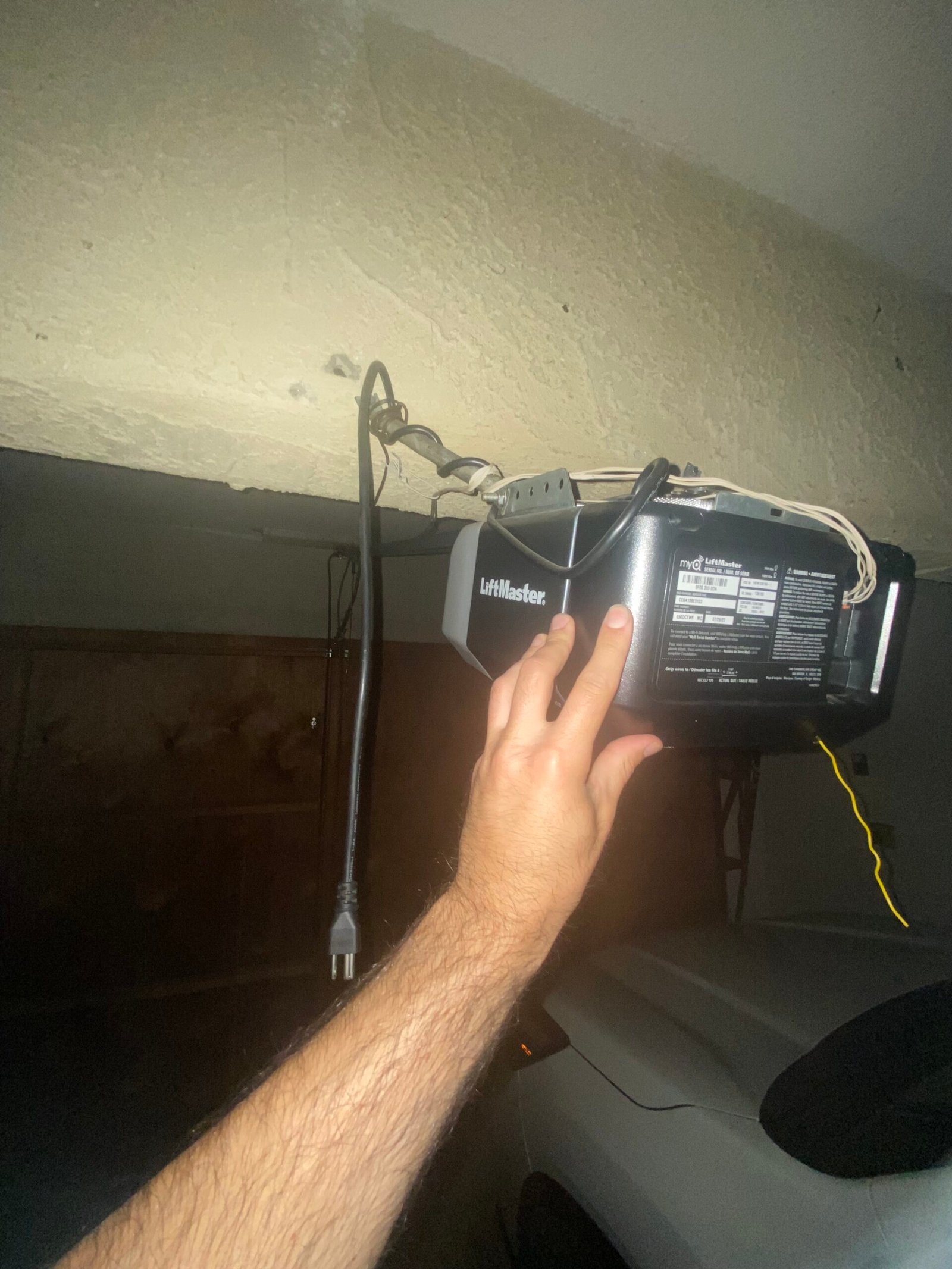
Garage Door Opener Service Area in Pasadena
The primary geographic focus of this article is Pasadena, California 91105, in Los Angeles County and the San Gabriel Valley.
Residential context may naturally include Old Pasadena, Bungalow Heaven, Hastings Ranch, Madison Heights and San Rafael Hills.
These neighborhood references identify Pasadena residential contexts and do not imply that Pasadena Garage Door Repair Experts operates separate offices or storefronts in those neighborhoods.
Homeowners can call (626) 415-3641 to ask about current garage-door opener repair or replacement availability in Pasadena.
Frequently Asked Questions About Garage Door Opener Repair vs. Replacement in Pasadena
Is it better to repair or replace a garage door opener?
Repair is often worth considering when the problem is limited to one replaceable component, compatible parts are available, the opener has otherwise been reliable and the physical garage door is properly balanced. Replacement becomes more attractive when several major components are failing, essential parts are unavailable, failures are recurring, California battery-backup requirements apply to the project or the homeowner wants meaningful functionality that the old opener cannot provide.
How do I know if the problem is the garage door opener or the spring?
A broken spring can make a working opener appear weak because the spring normally counterbalances garage-door weight. A visible gap in a torsion spring, a suddenly very heavy door or an opener that can lift the door only a few inches may indicate a spring-related problem. The mechanical door should be inspected before assuming the opener motor needs replacement.
Does a garage door opener need to be replaced if the remote stops working?
Usually not based on that symptom alone. If the wall control still operates the garage door, check the remote battery, programming, compatibility, lock mode and possible signal interference first. A remote problem can be completely separate from the opener motor and drive system.
Is a bad logic board worth repairing?
It can be when the correct replacement board is available and the motor, drive system, rail and other major opener components remain in good condition. If the opener has several additional major problems or the correct electronic part is unavailable, replacement becomes more useful to compare.
Do garage door openers in California need battery backup?
Yes, California law requires residential automatic garage-door openers sold or installed in the state on or after July 1, 2019 to have a battery-backup function. The law also restricts connecting a replacement residential garage door to an existing opener that does not meet that requirement. Existing project circumstances should be evaluated according to the current California requirements.
Does an old garage door opener automatically need replacement?
No. Age alone does not determine whether an opener should be replaced. Consider its reliability, condition, parts availability, safety systems, battery-backup requirements, compatibility with the door and the scope of the current failure. Some discontinued opener models continue to have manufacturer replacement parts available.
Should I replace a noisy garage door opener?
First identify where the noise comes from. Chain, drive gears, motor vibration or opener mounting can create opener noise, while rollers, hinges, tracks, springs and loose door hardware can create similar sounds. If the opener is operating correctly but quieter operation is a major household priority, replacement may still be considered as an upgrade.
Do I need a new opener when I replace my garage door?
Not automatically, but the existing opener must be compatible with the completed door and applicable California requirements must be considered. California law states that a replacement residential garage door cannot be installed in a manner that connects it to an existing residential opener that lacks the required battery-backup function.
Is a smart garage door opener worth replacing a working opener for?
It depends on how much the homeowner values app-based monitoring, remote controls, battery backup, quieter operation or other features. Some existing openers can gain smart functionality through compatible accessories, so complete replacement may not be necessary when connectivity is the only goal.
Who can I contact about garage door opener repair or replacement in Pasadena?
Pasadena homeowners can contact Pasadena Garage Door Repair Experts at (626) 415-3641 to describe their garage-door opener problem and ask about current opener repair or replacement service availability in Pasadena, California.
Find Pasadena Garage Door Repair Experts on Google Maps
You can also view Pasadena Garage Door Repair Experts on Google Maps .
Not Sure Whether Your Garage Door Opener Needs Repair or Replacement?
Start with diagnosis.
A failed remote, keypad, sensor, drive component or control can involve a very different decision from a motor failure, unavailable logic board or an opener with several recurring problems.
Just as importantly, a broken spring, displaced cable or binding garage door can make a functioning opener appear defective.
If your opener will not run, stops halfway, cannot lift the door, will not close normally, has stopped responding to controls or you are considering a California-compliant battery-backup replacement, contact Pasadena Garage Door Repair Experts to ask about current service availability.
Call (626) 415-3641.
Safety reminder: do not wind or unwind torsion springs, adjust cable drums, reconnect tensioned lift cables, force a badly off-track door, increase opener force to compensate for mechanical binding or bypass safety reversing sensors.
Related Pasadena Garage Door Topics
- Garage Door Remote or Keypad Not Working? Pasadena Homeowner Troubleshooting Guide
- Belt Drive vs. Chain Drive vs. Wall-Mount Garage Door Openers: Which Is Best for Pasadena Homes?
- Smart Garage Door Openers in Pasadena: Are Wi-Fi and App Controls Worth It?
- Do Garage Door Openers Need Battery Backup in California? Pasadena Homeowner Guide
- Garage Door Won't Open After a Power Outage? What Pasadena Homeowners Should Do